Me

-
Join 1,190 other subscribers
Twitter
Tweets by NicSpaullCategories
- 21st Century Skills (2)
- Architecture (1)
- Book review (6)
- Business (2)
- Camino (3)
- Christian (60)
- Cool websites (2)
- COVID-19 (12)
- Disability (1)
- ECD (3)
- Economics (44)
- Education (113)
- Environment (1)
- Funda Wande (7)
- Funding (2)
- Funny (15)
- Gender (4)
- Guest blog (6)
- Guest blog-post (2)
- Higher education (5)
- Inequality (1)
- Infographics (5)
- Intense (27)
- Interesting articles (6)
- LGBT (3)
- LGBTQ (10)
- link (5)
- Links I liked… (49)
- Matric (3)
- Me (37)
- Newspaper articles (12)
- NIDS-CRAM (6)
- Ongoing education (5)
- Personal (2)
- photo (214)
- Poetry (8)
- Politics (1)
- Popular press (5)
- Psychology (21)
- Q&A (28)
- Quotes (76)
- reading (14)
- regular (28)
- Research (9)
- Speech (1)
- Stanford (1)
- Teaching (4)
- Technology (1)
- Uncategorized (216)
- Wisdom (19)
Blogroll
Cool websites...
My books
Archives
- September 2026 (4)
- August 2023 (1)
- July 2023 (1)
- June 2023 (1)
- May 2023 (4)
- February 2023 (2)
- December 2022 (2)
- November 2022 (2)
- July 2022 (2)
- February 2022 (2)
- September 2021 (2)
- July 2021 (3)
- June 2021 (1)
- May 2021 (3)
- April 2021 (2)
- February 2021 (3)
- September 2020 (2)
- July 2020 (8)
- June 2020 (2)
- May 2020 (3)
- March 2020 (3)
- February 2020 (2)
- January 2020 (2)
- December 2019 (1)
- November 2019 (1)
- October 2019 (2)
- September 2019 (1)
- August 2019 (2)
- July 2019 (2)
- June 2019 (1)
- May 2019 (1)
- April 2019 (3)
- March 2019 (2)
- February 2019 (1)
- January 2019 (3)
- December 2018 (2)
- October 2018 (1)
- September 2018 (2)
- July 2018 (2)
- June 2018 (3)
- May 2018 (3)
- April 2018 (1)
- March 2018 (1)
- January 2018 (3)
- December 2017 (2)
- November 2017 (2)
- September 2017 (2)
- August 2017 (3)
- July 2017 (3)
- June 2017 (1)
- May 2017 (2)
- April 2017 (2)
- March 2017 (1)
- January 2017 (5)
- October 2016 (1)
- September 2016 (4)
- July 2016 (6)
- June 2016 (1)
- May 2016 (7)
- April 2016 (5)
- March 2016 (4)
- February 2016 (3)
- January 2016 (4)
- December 2015 (8)
- November 2015 (4)
- October 2015 (2)
- September 2015 (3)
- August 2015 (2)
- July 2015 (4)
- June 2015 (3)
- May 2015 (3)
- April 2015 (7)
- March 2015 (3)
- February 2015 (2)
- January 2015 (9)
- December 2014 (9)
- November 2014 (5)
- October 2014 (1)
- September 2014 (2)
- August 2014 (4)
- July 2014 (2)
- June 2014 (6)
- May 2014 (8)
- April 2014 (5)
- March 2014 (10)
- February 2014 (6)
- January 2014 (6)
- December 2013 (6)
- November 2013 (7)
- October 2013 (7)
- September 2013 (4)
- August 2013 (5)
- July 2013 (2)
- June 2013 (5)
- May 2013 (2)
- April 2013 (1)
- March 2013 (2)
- February 2013 (3)
- January 2013 (5)
- December 2012 (2)
- November 2012 (4)
- October 2012 (2)
- September 2012 (2)
- August 2012 (2)
- July 2012 (4)
- June 2012 (2)
- May 2012 (4)
- April 2012 (9)
- March 2012 (3)
- February 2012 (13)
- January 2012 (50)
- December 2011 (87)
- November 2011 (123)
- October 2011 (3)
- September 2011 (6)
- August 2011 (7)
- July 2011 (1)
- June 2011 (5)
- May 2011 (7)
- April 2011 (7)
- March 2011 (2)
- February 2011 (8)
- January 2011 (5)
- November 2010 (1)
- October 2010 (3)
- September 2010 (6)
- August 2010 (8)
- July 2010 (2)
- June 2010 (4)
- May 2010 (3)
- April 2010 (11)
- March 2010 (8)
- February 2010 (7)
- December 2009 (26)
Stellenbosch University

Roundup of the week…
- Economist article [April 14th 2012] on academic publishing – “Government bodies that fund academic research should require that the results be made available free to the public”
- Interesting article on the politics of succession in the ANC, an excerpt: “ANC branch activists can make their way through this mishmash of the New Testament, Lenin, and Walt Disney without having to engage with uncomfortable realities of corruption, unethical campaigning and state incapacity.”
- Andreas Schleicher on Preparing teachers and school leaders for the 21st century: “Everyone realises that the skills that are easiest to teach and easiest to test are now also the skills that are easiest to automate, digitize and outsource. Of ever-growing importance, but so much harder to develop, are ways of thinking, creativity, critical thinking, problem-solving, decision-making and learning; ways of working – including communication and collaboration; and tools for working – including information and communication technologies. The Nordic countries, in particular, also highlighted the importance of skills around citizenship, life and career and personal and social responsibility for success in modern democracies”
- An interview with Andreas Schleicher “The principle lesson I’ve learned is that focusing on teaching is going to be key. The second lesson is that there’s been an increase in educational spending (especially in industrial countries), but if we look at the way we spend the resources, they’re often focused on lowering class size rather than creating more engaging learning environments and raising the quality of teaching”
- C.S. Lewis on writing “Good English” is whatever educated people talk; so what is good in one place or time would not be so in another”…always prefer the plain direct word to the long, vague one. Don’t implement promises, but keep them…Never use abstract nouns when concrete ones will do. If you mean “More people died” don’t say “Mortality rose” via Chris Blattman
- Interview with Esther Duflo: “Can better data end global poverty?” I particularly liked Duflo’s answer to the question “Do you have a final goal in mind that you work towards?” and in true economist fashion she answers:
ED: I am not sure I have really an opinion on this, or that I should. I think the goals should be set by the political process, by what a society at some point wish is important. I may have my own view on what is important in life, but I am not a philosopher, and I don’t feel it is my job to tell people what they should think is important. I think the job of an economist should be to help individuals or societies (via their policy makers) reach these goals, once they have been set.
Photo from Nic Atmore
Educational intentions of all OECD countries…

“Belgium intends to conclude a pact with the providers of education and the trade unions on the teacher career. China seeks to vigorously improve the pre-service education for teachers and expand early childhood education for all children. Denmark wants to make elevating the status of the teaching profession a top national priority and underlines that educational pathways from age 0 to 18 need to strike a careful balance between social and subject-matter skills. Estonia aspires to a comprehensive reform of pre-service, in-service and co-operative professional development, following the model of the most advanced education systems. Finland seeks to develop new collaborative models for school development and teacher education development, a better alignment between curricula goals and educational assessment, and improved pedagogical use of social medial. Germany will bring the German Ministers and union leaders together to move the dialogue among the social partners beyond rhetoric. Hungary seeks to better align and reinforce the context, process, feedback and relationships among key players, aiming for genuine collaboration among stakeholders. Japan will further advance its holistic reform of preparation, recruitment and professional development. Korea wants to strengthen collaboration between school leadership and local communities. The Netherlands will introduce peer reviews for school leaders and teachers as the primary instrument for quality assurance. New Zealand will further develop a systemic approach to making successful practice common practice. Norway intends to work on career paths for teachers that can be combined with distributed and collaborative leadership and focus on how to implement national reforms all the way into the classroom. Poland will place the premium on preparing teachers for 21st century skills. Singapore seeks to further advance its whole system approach to education reform to achieve impact and sustainability. Sweden wants to do more to attract top students into the teaching profession and to create incentives to reward high performing teachers throughout their careers. Switzerland will seek new ways to create careers for teachers and to integrate other professionals into teaching. The United Kingdom seeks to promote an atmosphere and the conditions for teachers to be actively trusted and respected. The United States seeks to build a coherent and systemic process for engaging all actors in comprehensive large scale change, challenging every assumption, big or small. Of course, none of these pronouncements imply a formal commitment on the part of governments or unions, but they underline the intention of Ministers and Union leaders to move the education agenda forward. The 2013 Summit will tell how fast these visions turn into reality.”
-Andreas Schleicher (AKA the grand master of international education) here
Posted in Education
Low cost private schools – an alternative view

See excerpt below from Lewin and Little below (NOT Romney)
“Some have argued that low price private schools make a significant contribution to increased access to education by the poor but the evidence for this is often partial and incomplete and fails to demonstrate that such schools generate additional school places rather than provide a choice for those who would otherwise go to government school. It is also clear that those households with little or no cash income are unlikely to be able to afford the costs of the fees necessary to support unsubsidized private schooling…However the analysis shows that it is only households in the top two quintiles of income where the probability of attending private schools begins to increase. Private schools do indeed offer a choice for the relatively wealthy but have little or no impact on the access to education of the poor. The development of private schools has resulted in richer households opting out of the government schools removing the possibility of influential community voices being heard who have a stake in government schooling. It appears that these developments are neither pro-poor nor equitable and that it is clear that the state remains the provider of last resort” (Lewin & Little, 2011: 335).
This is a very interesting point and one which is not made in the South African press when the topic is discussed (see these articles from Economist, Economist, World Bank, and FT). While there have been a number of authors calling for the increase in low cost private schools, less emphasis is made about the research behind these claims. After reading Lewin & Little’s (2011) editorial I am less optimistic about the role of ‘low’ cost private schools in South Africa or, for that matter, most other sub-Saharan African countries. Their argument about the ‘influential community voices’ leaving the public system has many parallels with the fear of ‘white-flight’ during the transition after apartheid. In order to prevent white students (and teachers) fleeing to the private sector when school fees were abolished/equalized, the SA Schools Act made provision for the charging of school fees to supplement government funds. This prescient policy kept many white students and teachers in the public system, which helped to set a bar for appropriate standards of teaching, learning and assessment. It is widely acknowledged that it would have been detrimental if the majority of South Africa’s human capital (teachers) fled to the private sector. We need to think about the unintended consequences of these policies (like low-fee private schools) before jumping on the band-wagon. I’m still undecided about the place of low-fee private schools, but am slightly more skeptical than I was before I read this.
Lewin, K & Little A. 2011. Access to education revisited: Equity, drop out and transitions to secondary school in South Asia and Sub-Saharan Africa. International Journal of Educational Development 31(2011) 333-337
Roundup of Easter…

- My Masters thesis is now available online. Equity & Efficiency in South African primary schools : a preliminary analysis of SACMEQ III South Africa Although I suspect most people say this, it really is interesting and accessible 🙂
- Wonderful and insightful article on “The Law’s Majestic Equality” which opens with a quote from Anatole France “The majestic equality of the laws prohibits the rich and the poor alike from sleeping under bridges, begging in the streets and stealing bread” – stimulating read which reminds me of Deuteronomy 1:17 “You shall not be partial in judgement. You shall hear the small and the great alike. You shall not be intimidated by anyone, for the judgement is God’s” Also see Exodus 23:8 and Deuteronomy 16:19. I think I am going to try and include this in my lecture on social policy and inequality.
- Great Article by Ferial Haffajee on the state of SA’s self-narrative. Attention ANC: We are a serious country with serious potential.
- Economist article from last year titled “Schooling the whole family: Teaching is improving but slowly. Getting parents involved could speed things up”. So many parallels between Mexico and SA. Many useful ideas in here for discussion and thought-experiments…
- Jonathan Jansen writes a short article on “Seven costly mistakes” [in SA education since the transition] – mostly just common sense, but people like to listen to him.
- Charming 2 minute video on organ donation – “Pass it on when you’re done with it” then register to become an organ donor here – it takes 3 minutes and you could drastically improve someone’s quality of life!
- Innovation in US higher education – the birth of a new Ivy League university “Minerva University” (Economist article) which has as its motto “Critical Wisdom”. We really do need (more ) innovation in higher education across the board.
- Top ten of urban businesses – sensible futuristic thinking like increasing data use in/by cities and the proliferation of ‘community nodes’ which act as “cafes, wireless work stations, libraries, book stores and micro farmers markets”
Posted in Economics, Education, Links I liked..., Me
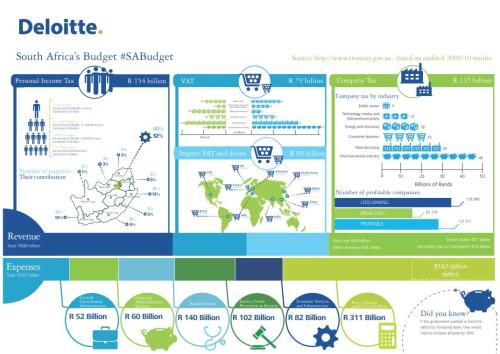
A suboptimal political economy equilibrium in South Africa (Infographic)

The above infographic is quite interesting and has its uses, but is the main interest/focus of government “Considerations of equity and fairness” ?? Slightly Utopian, especially given the ‘political economy’ title! Where has all the politics gone?
From here with the sub-title ” A suboptimal political economy equilibrium”
Posted in Economics, Uncategorized
The Iowa Car Crop
Economics at its best…

The Iowa Car Crop – Steven E. Landsburg
A thing of beauty is a job forever, and nothing is more beautiful than a succinct and flawless argument. A few lines of reasoning can change the way we see the world.
I found one of the most beautiful arguments I know while I was browsing through a textbook written by my friend David Friedman. While the argument might not be original, David’s vision is so clear, so concise, so incontrovertible, and so delightfully surprising, that I have been unable to resist sharing it with students, relatives, and cocktail party acquaintances at every opportunity. The argument involves international trade, but its appeal is less in its subject matter than in its irresistible force.
David’s observation is that there are two technologies for producing automobiles in America. One is to manufacture them in Detroit, and the other is to grow them in Iowa. Everybody knows about the first technology; let me tell you about the second. First, you plant seeds, which are the raw material from which automobiles are constructed. You wait a few months until wheat appears. Then you harvest the wheat, load it onto ships, and said the ships eastward into the Pacific Ocean. After a few months, the ships reappear with Toyotas on them.
International trade is nothing but a form of technology. The fact that there is a place called Japan, with people and factories, is quite irrelevant to Americans’ well-being. To analyze trade policies, we might as well assume that Japan is a giant machine with mysterious inner workings that convert wheat into cars.
Any policy designed to favor the first American technology over the second is a policy designed to favor American auto producers in Detroit over American auto producers in Iowa. A tax or a ban on “imported” automobiles is a tax or a ban on Iowa-grown automobiles. If you protect Detroit carmakers from competition, then you must damage Iowa farmers, because Iowa farmers are the competition.
The task of producing a given fleet of car can be allocated between Detroit and Iowa in a variety of ways. A competitive price system selects that allocation that minimizes the total production cost.* It would be unnecessarily expensive to manufacture all cars in Detroit, unnecessarily expensive to grow all cars in Iowa, and unnecessarily expensive to use the two production processes in anything other than the natural ratio that emerges as a result of competition.
That means that protection for Detroit does more than just transfer income from farmers to autoworkers. It also raises the total cost of providing Americans with a given number of automobiles. The efficiency loss comes with no offsetting gain; it impoverishes the nation as a whole.
There is much talk about improving the efficiency of American car manufacturing. When you have two ways to make a car, the road to efficiency is to use both in optimal proportions. The last thing you should want to do is to artificially hobble one of your production technologies. It is sheer superstition to think that an Iowa-grown Camry is any less “American” than a Detroit-built Taurus. Policies rooted in superstition do not frequently bear efficient fruit.
In 1817, David Ricardo—the first economist to think with the precision, though not the language, of pure mathematics—laid the foundation for all future thought about international trade. In the intervening 150 years his theory has been much elaborated but its foundations remain as firmly established as anything in economics. Trade theory predicts first that if you protect American producers in one industry from foreign competition, then you must damage American producers in other industries. It predicts second that if you protect American producers in one industry from foreign competition, there must be a net loss in economic efficiency. Ordinarily, textbooks establish these propositions through graphs, equations, and intricate reasoning. The little story that I learned from David Friedman makes the same propositions blindingly obvious with a single compelling metaphor. That is economics at its best.
*This assertion is true, but not obvious. Individual producers care about their individual profits, not about economywide costs. It is something of a miracle that individual selfish decisions must lead to a collectively efficient outcome….
The Armchair Economist: Economics and Everyday Life
From here

Posted in Economics
Lekker links…

- Paul Collier reviews Acemoglu & Robinson’s new book “Why Nations Fail”. Very interesting (and firm) prediction about China: “That states need order to prosper is important but no longer controversial. That they need inclusive institutions is, in view of China’s success, wildly controversial. Their argument is that order without inclusive institutions may enable an economy to escape poverty, but will not permit the full ascent to modern prosperity“
- Private schools for the poor – interesting article from the Economist
- Top 100 best NGO’s – in case you wanted to know…
- Wisdom from Calvin and Hobbes
- 50 most influential books of the last 50 years – useful link to have
- NYT article (22 March) on Cape Town’s racial divide
- M&G article (23 March) on Stellenbosch University and discrimination.
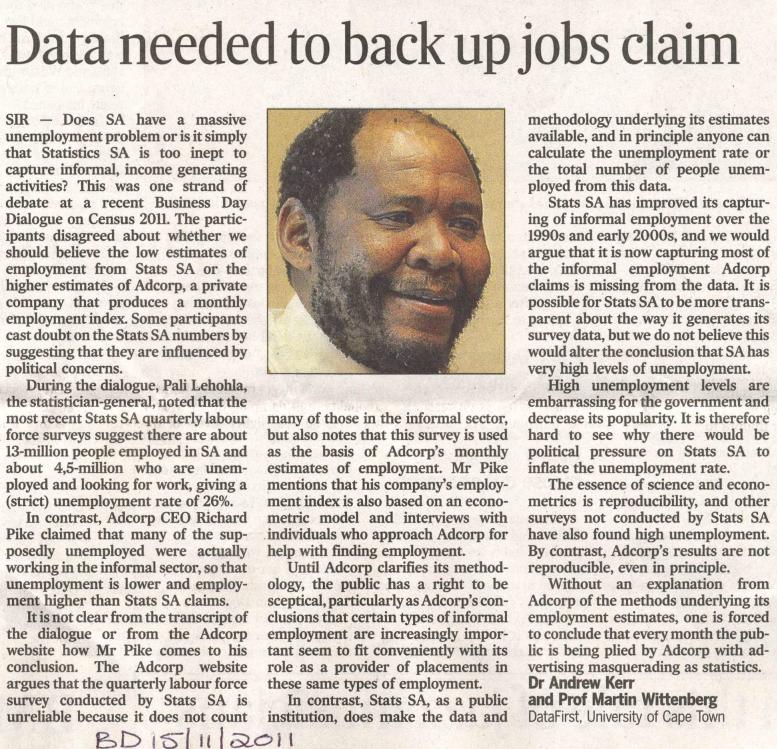
- Latest installment (Business Day 19 March) on the Adcorp vs UCT econometricians debate…as well as a detailed response by the UCT guys. You can tell Martin and Andrew had fun writing this with sections titled “Science and Sales”, “Rigor and Rot”, “Openness and obfuscation”, “Models and Moonshine”, and “Errors of differences and indifference to errors” – Adcorp it seems you picked the wrong econometricians to mess with…just saying.
- Cool music by Ben Howard, the Kongos,
Calvin and Hobbes on the gaping hole in contemporary art’s soul:
Calvin: People always make the mistake of thinking art is created for them. But really, art is a private language for sophisticates to congratulate themselves on their superiority to the rest of the world. As my artist’s statement explains, my work is utterly incomprehensible and is therefore full of deep significance.
N
Posted in Economics, Education, link, Links I liked...
Some things I’m reading…

- Brilliant NYT article titled “Pass the books, Hold the oil” It’s basically just a new take on Dutch Disease using PISA scores and natural resource endowments. Two parts that I loved:
- “When you don’t have resources, you become resourceful.”
- As the Bible notes, added Schleicher, “Moses arduously led the Jews for 40 years through the desert — just to bring them to the only country in the Middle East that had no oil. But Moses may have gotten it right, after all. Today, Israel has one of the most innovative economies, and its population enjoys a standard of living most of the oil-rich countries in the region are not able to offer.”
- World Bank’s lead economist for South Africa writes an interesting article on low cost private schools in SA. Intelligent, informed and interesting article asking questions that need to be asked…(also see this FT article on private schools in SA)
- Equal Education takes Minister of Education to court in an effort to force the Department to establish minimum norms and standards for school infrastructure (MG article). There are many ways to skin a cat – let’s see how this one turns out.
- Vavi tells teachers to buckle down and change the status quo, albeit in rhetoric of the revolution (can’t we get passed this?)…some interesting stats but not sure what he really wants here.
- Alain de Botton TED talk A kinder,gentler philosophy of success “One of the interesting things about success is that we think we know what it means. A lot of the time our ideas about what it would mean to live successfully are not our own. They’re sucked in from other people. And we also suck in messages from everything from the television to advertising to marketing, etcetera. These are hugely powerful forces that define what we want and how we view ourselves. What I want to argue for is not that we should give up on our ideas of success, but that we should make sure that they are our own. We should focus in on our ideas and make sure that we own them, that we’re truly the authors of our own ambitions. Because it’s bad enough not getting what you want, but it’s even worse to have an idea of what it is you want and find out at the end of the journey that it isn’t, in fact, what you wanted all along.”
- Paul Graham on writing
Posted in Economics, Education, link, Links I liked...
Links I liked…
Some more links I liked…
- “Creating a More Equal and Productive Britain” – A lecture by Professor James Heckman. ‘There is hard evidence on soft skills’. Based on a big research project titled “Personality, Psychology and Economics“
- Rethinking School – a Harvard Business Review article about American K-12 education. Explains the importance of good teachers and how Americans should use new technologies and teaching methods in their classrooms. Still wondering about the links with SA and whether technology can be used to leapfrog educational development steps in South Africa – if only…
- Why is research higher status than teaching? An interesting article by a Canadian economist. The one quip I really liked was the following on peer review:
“Some might say this is the best way to measure research productivity. After all, how can we, as outsiders, judge the rigor and relevance of research outside our own specialized discipline? Peer review is the sine qua non, the best and only test of research excellence. I have some sympathy for this view – although it must be confessed that, sometimes, peers are idiots. “
Posted in Economics, Education, Links I liked...
Tagged harvard business review, james heckman
And in other news…
Interesting education articles in the news…
- Anthony Butler – Preoccupied Zuma let’s down SA’s children (27 Jan 2012) – Interesting Business Day article on the need for increased political leadership in South African education
- Economist article on class size in OECD countries – should we be putting the best teachers in front of bigger classes? Schleicher seems to think so.
- Glad to see education is still the largest single item in the national budget…
- Stellenbosch: How a small university town is giving everyone free Wi-Fi – pretty cool!! Thanks MXit
- Witty Esquire article on casual dress sense for men…
1. Work on one thing at a time until finished.
2. Start no more new books, add no more new material to “Black Spring.”
3. Don’t be nervous. Work calmly, joyously, recklessly on whatever is in hand.
4. Work according to Program and not according to mood. Stop at the appointed time!
5. When you can’t create you can work.
6. Cement a little every day, rather than add new fertilizers.
7. Keep human! See people, go places, drink if you feel like it.
8. Don’t be a draught-horse! Work with pleasure only.
9. Discard the Program when you feel like it — but go back to it the next day. Concentrate. Narrow down. Exclude.
10. Forget the books you want to write. Think only of the book you are writing.
11. Write first and always. Painting, music, friends, cinema, all these come afterwards.
From Henry Miller on Writing, his 11 commandments:
Posted in Education
Creative destruction?

“In Italy for thirty years under the Borgias they had warfare, terror, murder, bloodshed – they produced Michelangelo, Leonardo da Vinci and the Renaissance. In Switzerland they had brotherly love, five hundred years of democracy and peace, and what did they produce…? The cuckoo clock.”
-Orson Welles
Makes you think…
Ogilvy on writing well…

Via Chris Blattman…
Advice from David Ogilvy, the advertising executive and inspiration for the “Mad Men” of TV fame.
The better you write, the higher you go in Ogilvy & Mather. People who think well, write well.
Woolly minded people write woolly memos, woolly letters and woolly speeches.
Good writing is not a natural gift. You have to learn to write well. Here are 10 hints:
1. Read the Roman-Raphaelson book on writing. Read it three times.
2. Write the way you talk. Naturally.
3. Use short words, short sentences and short paragraphs.
4. Never use jargon words like reconceptualize, demassification, attitudinally, judgmentally. They are hallmarks of a pretentious ass.
5. Never write more than two pages on any subject.
6. Check your quotations.
7. Never send a letter or a memo on the day you write it. Read it aloud the next morning — and then edit it.
8. If it is something important, get a colleague to improve it.
9. Before you send your letter or your memo, make sure it is crystal clear what you want the recipient to do.
10. If you want ACTION, don’t write. Go and tell the guy what you want.
David
From Letters of Note, via Brain Pickings.
I have not read the Roman-Raphaelson book, but it has just been downloaded to the Kindle.
Here are the books I recommend to my students on writing.
I also have advice on how to write an essay.
Posted in Uncategorized
Old rich white men
Chris Blattman explaining why he left business consulting and is now a development economist:

" In the end, though, I grew bored with business. You need something to get yourself out of bed in the morning and to work, and I can only get so excited about making old rich white men older, richer and whiter. So now my job is now figuring out how to make young poor non-white men older and richer (but hopefully not whiter). That is some progress."
From here
Posted in Uncategorized
Economist article – Education in SA
Education in South Africa – Still dysfunctional
Standards still leave a lot to be desired
Jan 21st 2012 | JOHANNESBURG | from the print edition

FORTE HIGH SCHOOL in Soweto, the sprawling black township outside Johannesburg, was once one of South Africa’s notoriously ill-equipped and poorly performing schools. Five years ago it had no running water, no functioning library, no computers and no sports ground. Designed for 800 pupils, it had to cater for 1,300. Only half those who reached the final year matriculated, gaining the most basic certificate for finishing school. But thanks to philanthropists “adopting” it, Forte has turned itself around. Last year it achieved an 80% pass rate, and half of its matric candidates qualified for university.
Among them was Albert Dove, a black student living with his unemployed, disabled father and poor enough to qualify for free school lunches. He got six distinctions in his exams, including 100% in physical science. Every weekend and throughout the holidays he attended extra maths and science classes at a centre in Soweto run by an international charity.
Much of his success, he said, is thanks to a school-feeding scheme set up by the Art of Living Foundation, an international outfit. “I have enough food in my stomach,” he explained. “I will not go out and steal from other children or go and gamble in the streets. I will not go out looking for a girlfriend or boyfriend to give me money for food…I will not smoke drugs to keep away the stress of having no food at home.” He wants to study nanotechnology but must first find funds. A university science course costs around 30,000 rand ($3,740) a year, excluding board and keep.
Low school standards and university fees that are too high for the poor majority help explain why South Africa, the continent’s biggest and most advanced economy, has so low a rate of university attendance. Only one in six gets that far, a much lower proportion than in other middle-income countries. A third drop out within a year. With a few notable exceptions, university standards in South Africa are pretty low. Employers often complain that universities are churning out graduates who are largely unemployable.
Three million South Africans aged 18-24, more than half the total, are outside education, training or employment. Seven in ten have no qualifications at all. Even among those with matric, only 17% are likely to get a job within a year of leaving school, according to Adcorp, a recruitment agency. After five years, 60% will still be jobless. Officially, 25% of South Africans are unemployed; the real figure is probably nearer 40%. Yet there are more than 800,000 vacancies crying out for suitable applicants in the private sector alone, even as 600,000 university graduates sit twiddling their thumbs at home.
The government claims things are improving since last year’s pass rate went up. But the proportion who pass has fluctuated wildly over the years, and often depends on how many of the weaker pupils are prevented from sitting the exam. Besides, the pass mark for many matric subjects is a mere 30%.
Teachers in black state schools work an average of 3.5 hours a day, compared with 6.5 hours in the former white state schools known as “Model C”. A fifth of teachers are absent on Fridays, rising to a third at the end of the month. The education minister herself admits that 80% of schools are still “dysfunctional”.
Posted in Uncategorized