Economist article – Education in South Africa

South African schools

E for education

Desegregation and investment have yet to boost black schoolchildren

Jan 13th 2011 | JOHANNESBURG | from the print edition

CONGRATULATIONS to the latest crop of school matriculants have been pouring in. Despite the enforced closure of schools throughout the football World Cup, hosted by South Africa, followed by a three-week teachers’ strike, the pass rate for the 2010 school-leaving “matric” examination, taken in November, has jumped by seven percentage points to 68%, bringing an apparent end to a six-year decline. But with half of all pupils dropping out of school before taking the exam and a required pass mark of just 30-40%, it is too soon for rejoicing. Educational standards in Africa’s biggest and most advanced economy remain generally dire.

Barely one in ten South African pupils qualifies for university, and only 5% end up with a degree. South Africa does particularly badly in maths and science, coming last (out of 48 countries) in a report published in 2003 by a Dutch institute called “Trends in International Maths and Science”, a study of Grade 9 pupils (aged 15). Humiliated, it withdrew from the 2007 series, though it plans to take part in this year’s tests. If the 2010 matric results are anything to go by, it may not do much better. Barely one in four matric candidates achieved a pass in maths and less than one in five passed physical science.

Seventeen years after the end of apartheid, black pupils still generally fare much worse than their white counterparts. In 2009 just over half of black matric candidates passed, compared with 99% of whites, 92% of Indians and 76% of coloureds (people of mixed race). Though blacks now account for nearly half of all university students (and 80% of the whole population), less than one in 20 of the relevant black age group, still facing harsh economic and social disadvantages, ends up with a degree, compared with almost half of all whites.

The lingering legacy of apartheid

Even though public schooling was desegregated in 1994, the vast majority of poor black children continue to go to severely deprived, overwhelmingly black schools. Two-thirds of state schools have no library or computer; 90% have no science laboratory; more than half of all pupils either have no text books or have to share them. Whites, by contrast, together with a small but growing contingent from the black middle class, send their children to the former all-white “Model C” state schools, with their far superior facilities, or, increasingly, to a private school.

Since 1994 the number of pupils attending independent schools has more than doubled to around 500,000 (4% of the total school population); six out of ten are black. Tuition fees, over a quarter subsidised by the state, range from a modest 1,600 rand ($230) to a hefty 80,000 rand a year. Many parents think it worth it. Class sizes are generally half those in state schools, the teachers are better qualified and the success rate a lot higher. More than 90% of private-school pupils can expect to get their matric, compared with just 30% of state-school pupils. The former Model C schools boast a similar success rate.

President Jacob Zuma has promised to make education his priority. Money is not the main problem: education already gobbles up about 20% of the government’s budget, representing over 5% of GDP. But attitudes, particularly those of the teachers, who are heavily unionised, will have to change. Angie Motshekga, the schools minister, admits that the system is largely “in crisis” and will take 20 years to fix. Others fear it may need longer.

From here

Letter from a slave to his ex-master

In 1865, a Colonel P.H. Anderson of Tennessee wrote to his former slave, Jourdan Anderson, asking that he come back to work on his farm.

Jourdan’s full reply is worth posting in full.

Dayton, Ohio,

August 7, 1865

To My Old Master, Colonel P.H. Anderson, Big Spring, Tennessee

Sir: I got your letter, and was glad to find that you had not forgotten Jourdon, and that you wanted me to come back and live with you again, promising to do better for me than anybody else can. I have often felt uneasy about you. I thought the Yankees would have hung you long before this, for harboring Rebs they found at your house. I suppose they never heard about your going to Colonel Martin’s to kill the Union soldier that was left by his company in their stable. Although you shot at me twice before I left you, I did not want to hear of your being hurt, and am glad you are still living. It would do me good to go back to the dear old home again, and see Miss Mary and Miss Martha and Allen, Esther, Green, and Lee. Give my love to them all, and tell them I hope we will meet in the better world, if not in this. I would have gone back to see you all when I was working in the Nashville Hospital, but one of the neighbors told me that Henry intended to shoot me if he ever got a chance.

I want to know particularly what the good chance is you propose to give me. I am doing tolerably well here. I get twenty-five dollars a month, with victuals and clothing; have a comfortable home for Mandy,—the folks call her Mrs. Anderson,—and the children—Milly, Jane, and Grundy—go to school and are learning well. The teacher says Grundy has a head for a preacher. They go to Sunday school, and Mandy and me attend church regularly. We are kindly treated. Sometimes we overhear others saying, “Them colored people were slaves” down in Tennessee. The children feel hurt when they hear such remarks; but I tell them it was no disgrace in Tennessee to belong to Colonel Anderson. Many darkeys would have been proud, as I used to be, to call you master. Now if you will write and say what wages you will give me, I will be better able to decide whether it would be to my advantage to move back again.

As to my freedom, which you say I can have, there is nothing to be gained on that score, as I got my free papers in 1864 from the Provost-Marshal-General of the Department of Nashville. Mandy says she would be afraid to go back without some proof that you were disposed to treat us justly and kindly; and we have concluded to test your sincerity by asking you to send us our wages for the time we served you. This will make us forget and forgive old scores, and rely on your justice and friendship in the future. I served you faithfully for thirty-two years, and Mandy twenty years. At twenty-five dollars a month for me, and two dollars a week for Mandy, our earnings would amount to eleven thousand six hundred and eighty dollars. Add to this the interest for the time our wages have been kept back, and deduct what you paid for our clothing, and three doctor’s visits to me, and pulling a tooth for Mandy, and the balance will show what we are in justice entitled to. Please send the money by Adams’s Express, in care of V. Winters, Esq., Dayton, Ohio. If you fail to pay us for faithful labors in the past, we can have little faith in your promises in the future. We trust the good Maker has opened your eyes to the wrongs which you and your fathers have done to me and my fathers, in making us toil for you for generations without recompense. Here I draw my wages every Saturday night; but in Tennessee there was never any pay-day for the negroes any more than for the horses and cows. Surely there will be a day of reckoning for those who defraud the laborer of his hire.

In answering this letter, please state if there would be any safety for my Milly and Jane, who are now grown up, and both good-looking girls. You know how it was with poor Matilda and Catherine. I would rather stay here and starve—and die, if it come to that—than have my girls brought to shame by the violence and wickedness of their young masters. You will also please state if there has been any schools opened for the colored children in your neighborhood. The great desire of my life now is to give my children an education, and have them form virtuous habits.

Say howdy to George Carter, and thank him for taking the pistol from you when you were shooting at me.

From your old servant,

Jourdon Anderson.

From Chris Blattman’s blog

Letter of the year, written in 1865

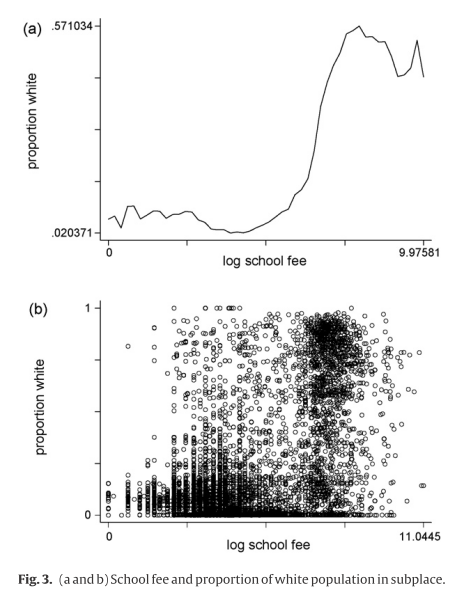
Spatial segregation and school quality in South Africa

Fascinating paper – worth a read.

School quality, clustering and government subsidy in post-apartheid South Africa ☆

Abstract

This paper examines a range of historical and geographic factors that determine the quality of public school education in post-apartheid South Africa. Empirical analysis shows, first, that population groups are still spatially segregated due to the legacy of apartheid, which implies that, given the positive correlation between school quality and school fees, quality education is concentrated in formerly white, coloured and Indian schools in areas where the majority is non-African. Second, school quality, measured by the learner–educator ratio, improves as school fee and government subsidy increase. In this sense, school fee can be decreased with an increase in government subsidy to maintain school quality. It is also shown that government subsidy is allocated to schools with lower quality and fees, increasing the number of subsidized teachers. To address the current imbalance, financial support to disadvantaged locales and schools should be strengthened further.

Full paper here

Creation / Evolution?

“How do we correlate the data of science with the teaching of Scripture?” Read Tim Keller’s “Creation, Evolution, and Christian Laypeople” (PDF)

Video

Gratitude

The most beautiful 10 minute video I’ve ever seen…at 3:30 it gets really amazing…

Cambridge Nights | Conversations about a life in science

Lant Pritchett talks to us about education, migration and development. Lant Pritchett is a Professor of the Practice of International Development at the Harvard Kennedy School. (38min)

Cambridge Nights | Conversations about a life in science.

How to referee an academic paper

Chris Blattman’s Blog 


How to referee an academic paper

Posted: 18 Jan 2012 06:17 PM PST

Berk Ozler does us all tremendous good by interviewing legendary QJE editor Larry Katz over at Development impact.

David McKenzie follows it up with his own tips on the same blog. He makes an observation I’ve heard too often, which is that older development economists eat their young.

For some time I’ve been meaning to write up my own thoughts on how to referee an empirical paper, inspired in large part by a photocopy Betty Sadoulet and Alainn de Janvry handed out in a development economics seminar. While not exactly the same thing, you can see my main suggestions in the last two pages of my causal inference and research design syllabus.

And to save all of us pain, I do have an old advice post on how to be a discussant on a seminar paper. there are many parallels.

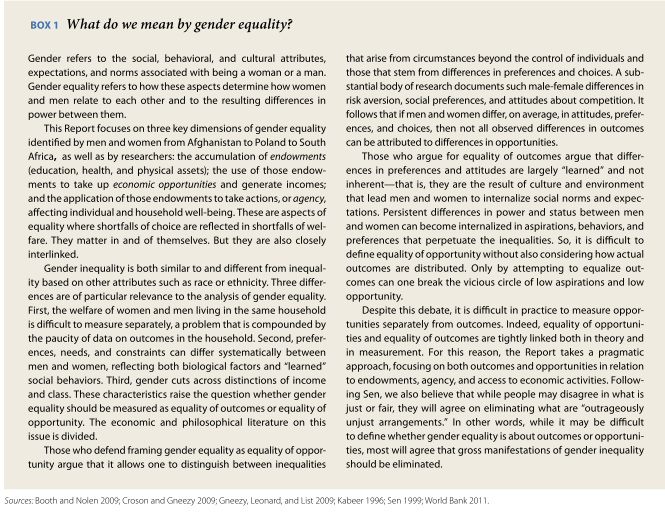
Gender Equality

From the WDR 2012

A day in the life…

Image

Book review: The Hiding Place – Corrie Ten Boom

File:Hidinh place book.jpg

I’ve just finished reading The Hiding Place by Corrie Ten Boom and what a wonderful book it has been. Corrie was a Dutch watchmaker during the second world war. The biography of this incredible woman reads like a conversation you might have with your grandfather or some other old, insightful person who seems to ooze wisdom and life experience. The story centers on the the Ten Boom family and its involvement in the Dutch underground movement which aimed to help Jews and those being persecuted by the Germans, with the second half of the book about her time in concentration camps and her rehabilitation work after the war was over.

The book canvases everything from heart-break, poverty and oppression to hope, forgiveness and new beginnings. To read the conversations and thought-life of this remarkable woman opened my eyes to what it must be like to be a person of deep faith in troubling times. And yet what I found most endearing about the book is that she is so honest and human – complete with insecurities and failures. When she is filled with anger towards the Germans and her sister starts praying for them she simply prays: “Oh Lord,” I whispered, “listen to Betsie, not me, because I cannot pray for those men at all.”

I would recommend this book to any Christian who needs to regain perspective on their world. On numerous occasions I was tangibly moved by their Christian responses to unspeakable horrors. Sharing what little they had in concentration camps, praying for their oppressors, and (after the war) rehabilitating prisoners and German soldiers by providing opportunities for forgiveness and healing.

Some quotes from the book:

When she was in solitary confinement:

“And I was not alone much longer: into my solitary cell came a small, busy black ant. I had almost put my foot where he was one morning as I carried my bucket to the door when I realized the honor being done me. I crouched down and admired the marvelous design of legs and body. I apologized for my size and promised I would not so thoughtlessly stride about again. “

When she was being interrogated by a German lieutenant in the concentration camp and was explaining her pre-war Bible study with mentally handicapped people:

“The lieutenant’s eyebrows rose higher and higher. “What a waste of time and energy!” he exploded at last. “If you want converts, surely one normal person is worth all the half-wits in the world!” I stared into the man’s intelligent blue-gray eyes: true National-Socialist philosophy, I thought, tulip bed or no. And then to my astonishment I heard my own voice saying boldly, “May I tell you the truth, Lieutenant Rahms?” I knew it was madness to talk this way to a Nazi officer. But he said nothing so I plunged ahead. “In the Bible I learned that God values us not for our strength or our brains but simply because He has made us. Who knows, in His eyes a half-wit may be worth more than a watchmaker. Or-a lieutenant.”

When Corrie’s family is unexpectedly brought into the concentration camp for the reading of her late father’s will (a requirement of Dutch law that the Nazi’s were oddly unwilling to break), her sister smuggles a package into the prison and surreptitiously gives it to her in the midst of an embrace. When Corrie generously gave away her last Gospel to a fellow inmate the day before, she had no idea that she would be briefly seeing her family the following day and that they would smuggle in an entire Bible for her:

“Swiftly I opened the package that Nollie had pressed into my hand with the first embrace. It was what my leaping heart had told me: a Bible, the entire Book in a compact volume, tucked inside a small pouch with a string for wearing around the neck as we had once carried our identity cards. I dropped it quickly over my head and down my back beneath my blouse. I couldn’t even find words with which to thank her: the day before, in the shower line, I had given away my last remaining Gospel.”

and some other quotes:

“More time passed. I kept my eyes on the ant hole, hoping for a last visit from my small friends, but they did not appear. Probably I had frightened them by my early dashing about. I reached into the pillowcase, took one of the crackers, and crumbled it about the little crack. No ants. They were staying safely hidden. And suddenly I realized that this too was a message, a last wordless communication among neighbors. For I, too, had a hiding place when things were bad. Jesus was this place, the Rock cleft for me. I pressed a finger to the tiny crevice.”

“Perhaps a long, long time. Perhaps many years. But what better way could there be to spend our lives?” I turned to stare at her. “Whatever are you talking about?” “These young women. That girl back at the bunkers. Corrie, if people can be taught to hate, they can be taught to love! We must find the way, you and I, no matter how long it takes….”

“They were services like no others, these times in Barracks 28. A single meeting might include a recital of the Magnificat in Latin by a group of Roman Catholics, a whispered hymn by some Lutherans, and a sotto-voce chant by Eastern Orthodox women. With each moment the crowd around us would swell, packing the nearby platforms, hanging over the edges, until the high structures groaned and swayed. At last either Betsie or I would open the Bible. Because only the Hollanders could understand the Dutch text, we would translate aloud in German. And then we would hear the life-giving words passed back along the aisles in French, Polish, Russian, Czech, back into Dutch. They were little previews of heaven, these evenings beneath the lightbulb. I would think of Haarlem, each substantial church set behind its wrought-iron fence and its barrier of doctrine. And I would know again that in darkness God’s truth shines most clear.”

“There are no ‘ifs’ in God’s kingdom. I could hear her soft voice saying it. His timing is perfect. His will is our hiding place. Lord Jesus, keep me in Your will! Don’t let me go mad by poking about outside it.”

“When He tells us to love our enemies, He gives, along with the command, the love itself. “

Years after she has left the concentration camp and started her rehabilitation centers, Corrie goes back to visit Ravensbruck and finds out something amazing:

“Corrie learned that her own release had been part of a clerical error; one week later all women her age were taken to the gas chamber.”

“What feeds the soul matters as much as what feeds the body.”

Jesus well adjusted?

“He was not at all like the psychologist’s picture of the integrated, balanced, adjusted, happily married, employed, popular citizen. You can’t really be very well ‘adjusted’ to your world if it says you ‘have a devil’ and ends by nailing you up naked to a stake of wood.” CS Lewis quoted in Yancey’s The Jesus I Never Knew

[ publicize off]

Video

Mwenda on Africa – absolutely brilliant!

The most intellectual African man I’ve ever heard give a presentation. Andrew Mwenda (Ugandan editor of The Independent) discusses “Africa and the Curse of Foreign Aid” at Yale in 2010. Quote: “The biggest challenge our continent is facing is how we can foster incentives for governments to develop a vested interest in building functional public institutions that can deliver public goods and public services through public institutions or political institutions impersonally to anonymous citizens” – In 78 minutes he covers everything from the sociological foundations of African political patronage (basically rooted in social insurance against agrarian risk), state functionality, incentives and the need for existential threats as drivers for real change. Do yourself a favor and learn from an African who clearly has something worthwhile to say.

Seeing through a glass dimly

“The vision of Christ that thou dost see
Is my vision’s greatest enemy:
Thine has a great hook nose like thine,
Mine has a snub nose like to mine….
Both read the Bible day and night,
But thou read’st black where I read white”
-William Blake
Phillip Yancey quotes this poem in his book “The Jesus I Never Knew” which I’m reading at the moment. It strikes at something that is so blatant, and yet I forget it all the time: we do not see things as they are, but as we are (cf Anais Nin). We walk around with lenses on our eyes and filters on our ears. We may hear the same words as each other but interpret them differently, or better yet, remember them differently (on that note, see this TED talk by Daniel Kahneman). This is surely what David meant when he said:26“To the faithful you show yourself faithful,to the blameless you show yourself blameless,

27to the pure you show yourself pure,

but to the crooked you show yourself shrewd.

Is God different to different people? Or do we see the same God differently? I think we do not see God, or the Bible, or each other objectively. Since we are a product of all that we have experienced, we see and interact with everything in light of that fact. You are the product of the people you meet, the books you read, the movies you watch, the courses you study – like a traveler learning new phrases and acquiring new mannerisms, we are far less ‘individual’ than we think we are.

Importantly, this is not just an interesting fact – a little thought experiment to brighten a dreary day, it really is of utmost importance. If I read the Bible differently to you, if I hear the same words of God differently to you, this is a problem. I’m not talking about the legitimate variety of expressions and ways we respond to God, I’m talking about deciding who God is, what his priorities are, and thus what ours should be. These should not be open to wide interpretation. Either God is something or He is not.

I wonder to what extent the Gospel writers were influenced by their own experiences? Their Jewishness, or their medicalness, or simply their personality type. Perhaps some degree of variation is actually what God wants, after all it was Him who chose 4 gospels and not one.

Video

Ben Goldachre – Bad Science [TED]

Networked Knowledge and Combinatorial Creativity | Brain Pickings

“Einstein famously attributed some of his greatest physics breakthroughs to his violin breaks, which he believed connected different parts of his brain in new ways.”
via Networked Knowledge and Combinatorial Creativity | Brain Pickings.

The ships’s wake

“More than 1900 years later,” said H.G.Wells, ” a historian like myself, who doesn’t even call himself a Christian, finds the picture centering irresistibly around the life and character of this most significant man…The historian’s test of an individual’s greatness is ‘what did he leave to grow?’ Did he start men to thinking along fresh lines with a vigor that persisted after him? By this test Jesus stands first.” You can gauge the size of a ship that has passed out of sight by the huge wake it leaves behind.”

– Phillip Yancey in “The Jesus I Never Knew” (p19)

The Best of Open Culture 2011

The Best of Open Culture 2011

 by Dan Colman

Before we rush headlong into a new year, it’s worth pausing, ever so briefly, to consider the ground we covered in 2011. What topics resonated with you … and jazzed us? Today, we’re highlighting 10 thematic areas (and 46 posts) that captured the imagination. Chances are you missed a few gems here. So please join us on our brief journey back into time. Tomorrow, we start looking forward again.

1) Universities Offer More Free Courses, Then Start Pushing Toward Certificates: The year started well enough. Yale released another 10 stellar open courses. (Find them on our list of 400 Free Courses). Then other universities started pushing the envelope on the open course format. This fall, Stanford launched a series of free courses that combined video lectures with more dynamic resources – short quizzes; the ability to pose questions to Stanford instructors; feedback on your overall performance; a statement of accomplishment from the instructor, etc. A new round of free courses will start in January and February. (Get the full list and enroll here.) Finally, keep your eyes peeled for this: In 2012, MIT will offer similar courses, but with one big difference. Students will get an official certificate at the end of the course, all at a very minimal charge. More details here.

2) Cultural Icons at Occupy Wall Street: OWS was a big national story, and we were always intrigued by its cultural dimension — by the cultural figures who championed the movement. You can revisit performances/speeches by: Philip Glass & Lou Reed; Willie Nelson, Pete Seeger, and Arlo Guthrie; David Crosby and Graham Nash; Joseph Stiglitz and Lawrence Lessig; Noam Chomsky; and Slavoj Zizek. Also check out: 8 Lectures from Occupy Harvard and Artistic Posters From Occupy Wall Street.

3) Books Intelligent People Should Read: Neil deGrasse Tyson’s list “8 (Free) Books Every Intelligent Person Should Read” ended up generating far more conversation and controversy than we would have expected. (Users have left 83 comments at last count.) No matter what you think of his rationale for choosing these texts, the books make for essential reading, and they’re freely available online.

Tyson’s list dovetails fairly nicely with another list of essential texts — The Harvard Classics, a 51 volume set that’s available online. According to Charles W. Eliot, the legendary Harvard president, if you were to spend just 15 minutes a day reading these books, you could give yourself a proper liberal education. And that could partly apply to another list we pulled together: 20 Popular High School Books Available as Free eBooks & Audio Books— the great literary classics taught in classrooms all across America, all free…

4) Christopher Hitchens and Stephen Fry: Christopher Hitchens left us this past month. And, until his last day, Hitchens was the same old Hitch — prolific, incisive, surly and defiant, especially when asked about whether he’d change his position on religion, spirituality and the afterlife. All of this was on display when he spoke at the American Jewish University in Los Angeles last February. We covered his comments in a post called, No Deathbed Conversion for Me, Thanks, But it was Good of You to Ask. And even from the grave, Hitchens did more of the same, forcing us to question the whole modern meaning of Christmas.

During Hitch’s final days, Stephen Fry emceed a large tribute to his friend in London, an event that brought together Richard Dawkins, Christopher Buckley, Salman Rushdie, Lewis Lapham, Martin Amis, poet James Fenton and actor Sean Penn. It’s well worth a watch. But you also shouldn’t miss some other great videos featuring the wisdom of Mr. Fry — his introduction to the strange world of nanoscience, his animated debate on the virtues (or lack thereof) of the Catholic Church, and his thoughtful reflection, What I Wish I Had Known When I Was 18.

5) Four for the Fab Four: John, Paul, Ringo and George. We sneak them in whenever we can. A sprinkling here and there. This year, we served up an ever-popular post, Guitarist Randy Bachman Demystifies the Opening Chord of ‘A Hard Day’s Night’, and a no less popular freebie: Download The Beatles’ Yellow Submarine as a Free, Interactive eBook. Trailing right behind are two other good Beatles picks: All Together Now: Every Beatles Song Played at Once and The Beatles’ Rooftop Concert: The Last Gig.

6) Wisdom from Great Philosophers: Want the chance to take courses from great philosophers? Here’s your opportunity. Our meta post brought together courses/lectures from Bertrand Russell, Michel Foucault, John Searle, Walter Kaufmann, Leo Strauss, Hubert Dreyfus, and Michael Sandel. You could get lost in this for days. Also while you’re at it, you should check out The History of Philosophy … Without Any Gaps, an ongoing podcast created by Peter Adamson (King’s College London) that moves from the Ancients to the Moderns. Plus we’d encourage you to revisit: Noam Chomsky & Michel Foucault Debate Human Nature & Power in 1971.

7) Vintage Film Collections: Scouring the web for vintage films. It’s something we love to do. In 2011, we brought you 22 films by Alfred Hitchcock, 25 Westerns with John Wayne, 32 Film Noir classics, and a series of films by the great Russian director Andrei Tarkovsky. All are listed in our big collection of Free Movies Online.

8) Back to the Future: We had fun going back — way back — and seeing how past generations imagined the future. Arthur C. Clarke Predicted the Future in 1964 … And Pretty Much Nailed It. Before that, American fashion designers looked roughly 70 years into the future and guessed how women might dress in Year 2000. Turns out fashion designers aren’t the best futurists. And, even before that (circa 1922), we get to see the world’s first mobile phone in action. Seriously!

9) Animated Films: 2011 started off on exactly the right note. On January 1, we featured Shel Silverstein’s animated version of The Giving Tree. Then some other gems followed: Destino, the Salvador Dalí – Disney collaboration that started in 1946 and finished in 1999; Spike Jonze’s Auprès de Toi (To Die By Your Side), a short stop motion film set inside the famous Parisian bookstore, Shakespeare and Company; John Turturro narrating an animated version of Italo Calvino’s fairy tale, “The False Grandmother;” and a series of animated films featuring the voice of Orson Welles. Also let’s not forget these splendid animation concepts for The Amazing Adventures of Kavalier and Clay and, just for good measure, Terry Gilliam’s vintage primer on making your own cut-out animation.

10) New Archives & Art on the Web: Last but not least — 2011′s new archival projects that brought great culture to the web.

And now onward into 2012….

Less Wrong transcribes Tyler Cowen’s Tedx talk on stories:

…we should be suspicious of stories. We’re biologically programmed to respond to them. They contain a lot of information. They have social power. They connect us to other people. So they’re like a kind of candy that we’re fed when we consume political information, when we read novels. When we read nonfiction books, we’re really being fed stories.

…So what are the problems of relying too heavily on stories? You view your life like “this” instead of the mess that it is or it ought to be.

…narratives tend to be too simple. The point of a narrative is to strip it way, not just into 18 minutes, but most narratives you could present in a sentence or two. So when you strip away detail, you tend to tell stories in terms of good vs. evil, whether it’s a story about your own life or a story about politics.

…As a simple rule of thumb, just imagine every time you’re telling a good vs. evil story, you’re basically lowering your IQ by ten points or more. If you just adopt that as a kind of inner mental habit, it’s, in my view, one way to get a lot smarter pretty quickly.