Look for the outlier

Human Development Index: Deconstructing development | The Economist


You cannot kill us all.

“If you want to go to war . . . I must be honest and admit that we cannot stand up to you on the battlefield.  We  don’t  have  the resources. . . . But you must remember two things. You cannot win because of our numbers; you cannot kill us all. And you cannot win because of the international community. They will rally to our support and they will stand with us.” – Nelson Mandela speaking to a group of Afrikaner generals. 

Sparks 1996.  Tomorrow Is  Another  Country:  The  Inside  Story  of  South Africa’s Road to Change. University of Chicago Press.

Rationale for Apartheid…

“It was but yesterday that the Afrikaners wrested from British impe-

rial occupation the right to be a nation, to be independent in part-

nerships with their countrymen of British stock. And today, with

this  battle  that  is  all  of  Afrikaner  history  hardly  fought,  the

demand comes that they submit to a new imperialism, not this

time to the weapons of Europe, but to the numbers of Africa. The

answer, not unnaturally, is no. Unlike the English in India and the

Dutch in Indonesia, the Afrikaner has nowhere else to go. For him

there is no Britain and no Holland to return to; for him no central

shrine of national existence to survive the death of the outposts.

On the soil of Africa he, and with him his history, culture and lan-

guage, stay or perish.” –  Schalk Pienaar

Source: Sparks, Allister. 1990. The Mind of South Africa. Boston: Little, Brown p208

In Fiske and Ladd 2004 “Elusive Equity” – the book is downloadable for free here


In(equality)justice

“A similar lesson emerges from a classic experiment conducted by Franz de Waals and Sarah Brosnan. The primatologists trained brown capuchin monkeys to give them pebbles in exchange for cucumbers. Almost overnight, a capuchin economy developed, with hungry monkeys harvesting small stones. But the marketplace was disrupted when the scientists got mischievous: instead of giving every monkey a cucumber in exchange for pebbles, they started giving some monkeys a tasty grape instead. (Monkeys prefer grapes to cucumbers.) After witnessing this injustice, the monkeys earning cucumbers went on strike. Some started throwing their cucumbers at the scientists; the vast majority just stopped collecting pebbles. The capuchin economy ground to a halt. The monkeys were willing to forfeit cheap food simply to register their anger at the arbitrary pay scale.” (from here)

Why do inequality and injustice rile us so much? It seems that we have an in-built sense of fairness and justice. Perhaps in equality we find justice…

Best stats question ever…

Best statistics question ever

Fear no man.

Wall Photos

Wall Photos

Wall Photos

Wall Photos

Wall Photos

Wall Photos

Everybody is a genius.

Gender and Time

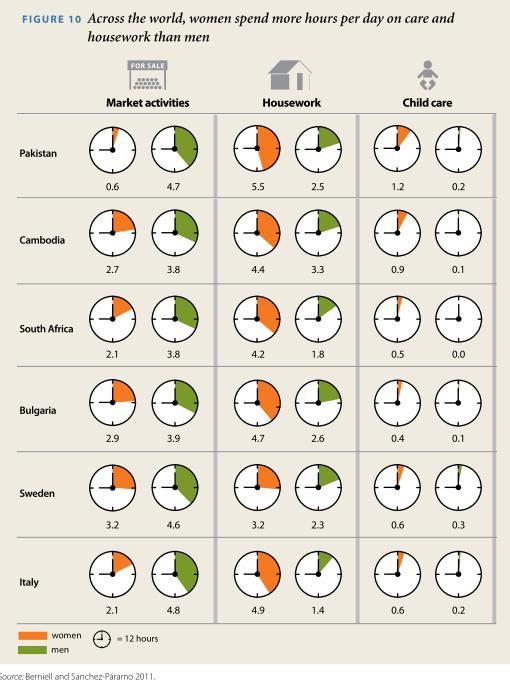
The recently released World Development Report 2012 has been released. This year’s theme is about Gender Equality and Development. I really like the above infographic. Italian women seem to spend a great deal of time on housework, while Pakistani men spend hardly any time on market activities. It’s also quite surprising how consistent the trends are between the genders and across countries.


How regularly do school children eat in Southern Africa?

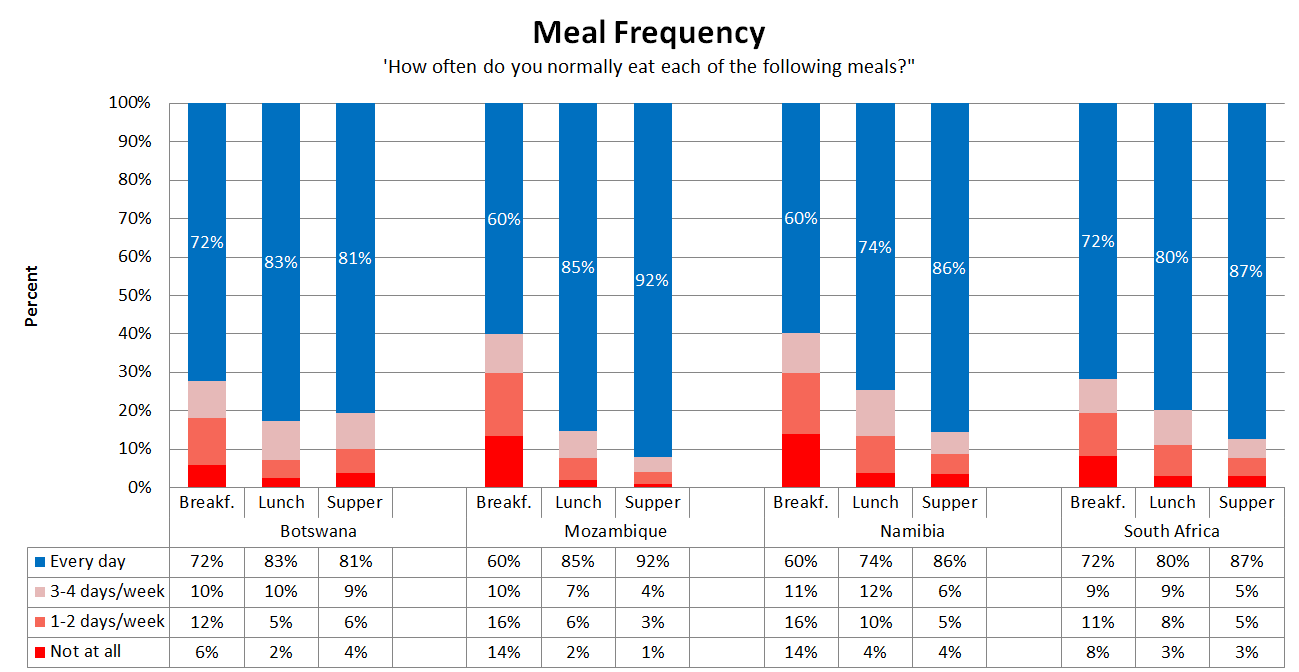
I’m currently working on a paper for SACMEQ which compares the educational performance of Botswana, Mozambique, Namibia and South Africa. I decide to include one or two things on here for those who are interested. The above graph shows the meal frequency of Grade 6 students (approx 13 yrs old) in each of the countries – click to enlarge. One or two observations:

The importance of nutrition for cognitive development has been well established in the literature. Del Rosso (1999, p. 5) provides a concise summary of the impact of poor nutrition:

“Children who lack certain nutrients in their diet (particularly iron and iodine), or who suffer from protein-energy malnutrition, hunger, parasitic infections or other diseases, do not have the same potential for learning as healthy and well-nourished children. Weak health and poor nutrition among school-age children diminish their cognitive development either through physiological changes or by reducing their ability to participate in learning experiences – or both … Children with diminished cognitive abilities and sensory impairments naturally perform less well and are more likely to repeat grades and drop out of school than children who are not impaired; they also enrol in school at a later age, if at all, and finish fewer years of schooling.”

In response to this, and partially as an initiative to alleviate child hunger, many low income countries have implemented school feeding programs, including Botswana and South Africa. Figure 26 below shows the proportion of Grade 6 students that reported receiving at least one free school meal per day. Botswana has the highest proportion (91%), followed by South Africa (78%), Namibia (25.64%), and Mozambique (12.64%). The success of Botswana’s school feeding program is widely acknowledged, and has also been credited with improving school attendance rates in the country (Zuze, 2010, p. 3).

Although free school meals can make up for a lack of nutrition at home, the majority of a child’s nutrition will come from the home-context. The SACMEQ III survey provides a useful measure of meal frequency. One question in the student questionnaire asked “How often do you eat each of the following meals?” (breakfast, lunch and supper), with the four options being ‘every day of the week’, ‘3 or 4 days per week’, ‘1 or 2 days per week’, and ‘not at all’. The results of this question split by country are shown in Figure 27 below.  Three observations are worth noting:

1)      There is a high proportion Mozambican and Namibian students who do not eat breakfast regularly, if at all. Indeed, 30% of Grade 6 children in Mozambique and Namibia reported that they only at breakfast once or twice a week, or not at all, compared to 19% in South Africa and 18% in Botswana. This can have a detrimental effect on learning. As Del Rosso (1999, p. 5) notes: “Even temporary hunger, common in children who are not fed before going to school, can have an adverse effect on learning. Children who are hungry have more difficulty concentrating and performing complex tasks, even if otherwise well nourished”.

2)      14% of Namibian children reported that they only at lunch once or twice a week, or not at all, compared to 11% for South Africa, 8% for Mozambique, and 7% for Botswana.

3)      There is a surprisingly low proportion of Batswana students who reported having supper every day (81%), compared to Namibia (86%), South Africa (87%), and Mozambique (92%).

It is perhaps counter-intuitive that Mozambique should have the highest proportion of students receiving lunch and supper ‘every day’. However, this may be because many Mozambican children do not receive a morning meal and thus their parents are more likely to give them mid-day and evening meals. If this were the case, one might expect Namibia to show a similar trend since it also has a low proportion of students receiving breakfast ‘every day’, yet it does not seem to exhibit such a trend.

Although meal frequency is an important indicator of nutritional intake, it provides no indication of nutritional content. Within our four country sample, it is not unreasonable to assume that there is a positive relationship between nutritional-content of the average meal and GDP per capita. For example, it is more likely that South African children have access to iodized salt and fortified cereals than do their Mozambican counterparts. Therefore, although 92% of Mozambican children report that they receive supper ‘every day’ (compared to 87% of South African children), one should be aware that these meals most probably have differing nutritional content.

These results can be found in this SACMEQ Working Paper

Fragile

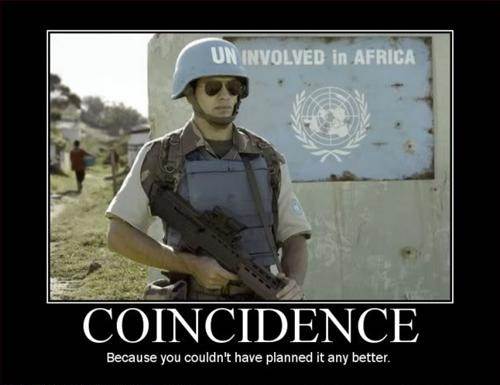
Involved in Africa?

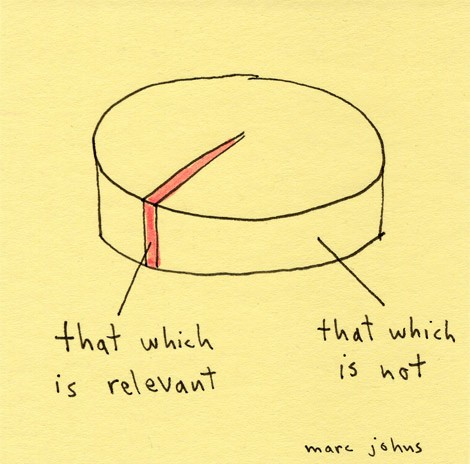
PrioRitisE

Go to the places that scare you

“Confess your hidden faults.

Approach what you find repulsive.

Help those you think you cannot help.

Anything you are attached to, let it go.

Go to the places that scare you.”

-Advice from her teacher to the Tibetan Yogini Machik Labdron

in ‘The Places that Scare You” By Pema Chodron

Peace for the wicked?

Alec Motyer on Isaiah 

“The rewritten brief of the Servant (49:1-6) arose out of the recognition (48:22) that there is no peace for the wicked. Consequently, there can be no unconditional call into blessing. Wickedness, objectively considered, has been dealt with by the Servant’s death; wickedness subjectively considered, calls for repentance. If we may say that chapter 54 details the objective, God-given benefits of the Servant’s work, chapter 55 answers to its subjectivity in emphasizing the response which brings those benefits into personal experience. There is free entrance into life (1-5) through the moral and spiritual response of turning to God (6-11).

‘…we come to the Lord as we are, but not to stay as we are…’


A real ingredient in the divine happiness

“To please God…to be a real ingredient in the divine happiness…to be loved by God, not merely pitied, but delighted in as an artist delights in his work or a father in a son – it seems impossible, a weight or burden of glory which our thoughts can hardly sustain. But so it is.

C.S. Lewis, ‘The Weight of Glory”

Get Lost in a Library…

“A library is many things. It’s a place to go, to get in out of the rain. It’s a place to go if you want to sit and think. But particularly it is a place where books live, and where you can get in touch with other people, and other thoughts, through books… A library is a good place to go when you feel bewildered or undecided, for there, in a book, you may have your questions answered. Books are good company, in sad times and happy times, for books are people — people who have managed to stay alive by hiding between the covers of a book.” ~ E.B. White

From ‘Letters to the Children of Troy’


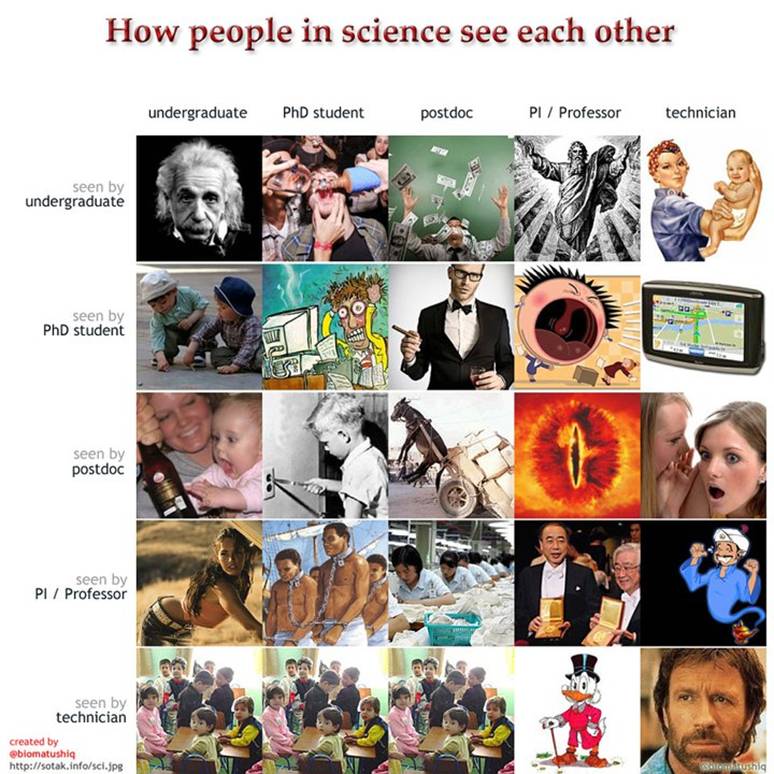
How people in science see each other

‘Nuclear Man’

“From time to time a man enters into your life who, by his appearance, his behavious and his words, intimates in a dramatic way the condition of modern man. Such a man was Peter for me. He came to ask for help, but at the same time he offered a new understanding of my own world! Peter is twenty-six years old. His body is fragile; his face, framed in long blond hair, is thin with a city pallor. His eyes are tender and radiate a longing melancholy. His lips are sensual, and his smile evokes an atmosphere of intimacy. When he shakes hands he breaks through the formal ritual in such a way that you feel his body as really present. When he speaks, his voice assumes tones that ask to be listend to with careful attention.

As we talk, it becomes clear that Peter feels as if the many boundaries that give structure to life are becoming increasingly vague. His life seems a drifting over which he has no control, a life determined by many known and unknown factors in his surroundings. The clear distinction between himself and his milieu is gone and he feels that his ideas and feelings are not really his; rather, they are brought upon him. Sometimes he wonders: “What is fantasy and what is reality?” Often he has the strange feeling that small devils enter his head and create painful and anxious confusion. He also does not know whom he can trust and whom not, what he shall do and what not, why to say “yes” to one and “no” to another. The many distinctions between good and bad, ugly and beautiful, attractive and repulsive, are losing meaning for him. Even to the most bizarre suggestions he says: “Why not? Why not try something I have never tried? “Why not have a new experience, good or bad?”

In the absence of clear boundaries between himself and his milieu, between fantasy and reality, between what to do and what to avoid, it seems that Peter has become a prisoner of the now, caught in the present without meaningful connections with his past or future. When he goes home he feels that he enters a world that has become alien to him. The words his parents use, their questions and concerns, their aspirations and worries, seem to belong to another world, with another language and another mood. When he looks into his future everything becomes one big blur, an impenetrable cloud. He finds no answers to why he lives and where he is heading. Peter is not working hard to reach a goal, he does not look forward to the fulfillment of a great desire, nor does he expect that something great or important is going to happen. He looks into empty space and is sure of only one thing: If there is anything worthwhile in life it must be here and now.

I did not paint this portrait of Peter to show you a picture of a sick man in need of psychiatric help. No, I think Peter’s situation is in many ways typical of the condition of modern men and women. Perhaps Peter needs help, but his experiences and feelings cannot be understood merely in terms of individual psychopathology. They are part of the historical context in which we all live, a context which makes it possible to see in Peter’s life the signs of the times, which we too recognise in our own life experiences, What we see in Peter is a painful expression of the situation of what I call ‘nuclear man.’

…Nuclear man is a man who has lost naive faith in the possibilities of technology and is painfully aware that the same powers that enable man to create new lifestyles carry the potential for self-destruction…

…Only when man feels himself responsible for the future can he have hope or despair, but when he thinks of himself as the passive victim of an extremely complex technological bureaucracy, his motivation falters and he starts drifting from one moment to the next, making life a long row of randomly chained incidents and accidents.

When we wonder why the language of traditional Christianity has lost its liberating power for nuclear man, we have to realize that most Christian preaching is still based on the presupposition that man sees himself as meaningfully integrated with a history in which God came to us in the past, is living under us in the present, and will come to liberate us in the future.

…A preaching and teaching still based on the assumption that man is on his way to a new land filled with promises, and that his creative activities in this world are the first signs of what he will see in the hereafter, cannot find a sounding board in a man whose mind is brooding on the suicidal potentials of his own world…Obviously the level of awareness and visibility is different in different people, but I hope you will recognize in your own experiences and the experiences of your friends some of the traits which are so visible in Peter’s life style. And this recognition might also help you to realize that Christianity is not just challenged to adapt itself to a modern age, but is also challenged to ask itself whether its unarticulated suppositions can still form the basis of its redemptive pretensions.”

– Henri Nouwen ‘The Wounded Healer”

List of OpenCourseWare educational sites (from UCT)

UCT has recently decided that they will allow students to download course materials from selected OCW sites without the downloads affecting their internet quotas. What a brilliant idea – hopefully Stellenbosch follows suit soon (To this end I’ve sent off a few emails to get the ball rolling). For those of us who are non-UCT students, and those who are new to OCW, the list of OCW sites they provide is auite useful – see “UCT list of main OCW sites” .

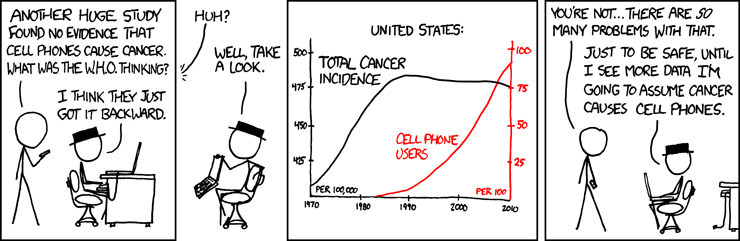
Post Hoc Ergo Propter Hoc