Unconventional thoughts about unemployment

“The presence of massive unemployment in Europe (10 to 12 percent in many of the major European countries) entails deprivations that are not well reflected in income distribution statistics. These deprivations are often downpalyed on the grounds that the European system of social security (including unemployment insurance) tends to make up for the loss of income and unemployment. But the unemployment is not merely a deficiency of income that can be made up through transfers by the state…it is also a source of far-reaching debilitating effects on individual freedom, initiative, and skills. Among its manifold effects, unemployment contributes to the “social exclusion” of some groups, and it leads to losses of self-reliance, self-confidence and psychological and physical health. Indeed it is hard to escape a sense of manifold incongruity in contemporary European attempts to move to a more self-help social climate without devising adequate policies for reducing the massive and intolerable levels of unemployment that make such self-help extremely difficult” – very true! Taken from the development guru Amartya Sen in “Development as Freedom” page 21

The conclusion…

The concluding note on how to live your life: (see A Binary, Over-simplified Model of the Consequences of my Choices – previous 3 blog posts)

Perhaps by dichotomising this issue I have made it seem overly simple. Either you choose option A or you choose option B for your life. This is not the case. The world is not a binary system of ones and zeroes but an infinitely complex set of multivariate, interconnected relationships. We try and model the world by making assumptions (economists!) or by over-simplifying complex issues (as above). When we model in this way, we risk losing the usefulness of the model, quite simply because it no longer represents reality. It is too far removed and abstracted from the real, complex system that the jump from the model to the real world is too large. I hope that my model (a binary, over-simplified model of the consequences of my choices) still has some usefulness, even after the oversimplification.

Very few people are entirely hedonistic, without a shred of redeeming character, and even less live completely godly lives. We are all some combination of these two options. The one advantage of the binary representation, I think, is that it symbolises that we cannot or rather that we should not dabble in one (the hedonistic option for me) every now and then and live mostly in the other, but should live wholly in one of these – either hot or cold, not some perverted mixture of the two (salt-water and fresh water, grapes and thorn bushes, figs and thistles for example). Wherever you find yourself, I think it is imperative that we are honest with ourselves – something I am trying to do.

It’s all good and well to know what we should do, but how can we actually do this? This is where my little model fails – it is descriptive and not prescriptive. I highly doubt that a prescriptive model of that complexity could be represented dichotomously, and my initial speculation is that we already have that prescriptive model…we just don’t follow its prescriptions….just a thought  🙂

Word of God option

The second of two options on how to live your life: (see A Binary, Over-simplified Model of the Consequences of my Choices –  see 2 previous blog posts)

  1. Word of God Option


  • For lack of a better description I shall call this option the W.O.G. Option. It encompasses seeing things from God’s perspective. Acknowledging that the Bible is God’s manual for life and outlines the best way to live. The directives and exhortations outlined in the Bible are not suggestions on a ‘good’ way to live, they outline the only way that leads to life.
  • You are more productive. You are more focused. You care about doing your best. You are able to work for longer periods of time.
  • You have to be more disciplined if you are to choose this option. You cannot act on every whim, fulfil every desire or say anything that comes to your mind. You act like a rational human that thinks, contemplates and considers things before doing them. Not like an animal that does whatever it wants to. There is thought for the long term and not only the here-and-now.
  • You are confident inside yourself. “The righteous are as bold as a lion” – you know this is also true. This confidence manifests itself in numerous ways; willingness to challenge anyone if they are acting unjustly and the ability to act courageously when needed.
  • Your moods are much more stable and you are more able to brush off your irritability. You are a nicer person to be around; you are more stable and joyful.
  • You are more organised, probably a bi-product of living a more disciplined life.
  • You are less materialistic. You understand better that people are what is important and spend your time accordingly. (Although there are numerous elements relating to Biblical directives this is one of the most pertinent for me). Some of these other directives are: to care for the poor, to share God’s love with people, to fellowship with believers etc)
  • Another directive is to study the Bible and to know God more. In this option you devote more time to theology and understanding the Bible.

Hedonistic option

The first of two options on how to live your life: (see A Binary, Over-simplified Model of the Consequences of my Choices – previous blog post)

  1. Hedonistic Option
  • Feels very good (let’s not kid ourselves) when you are doing it but afterwards you feel guilty and dirty. If you indulge in this option enough the guilt might start to lessen and the dirty feeling might stop feeling dirty in the same way that people who live by a rubbish dump don’t smell the stench.
  • You are not as productive as you can be since you are distracted by every whim and pleasure that might cross your mind.
  • There is very little discipline involved in this option and this spills over into other areas of your life.
  • Inside yourself you are less confident even though this isn’t necessarily reflected in your outward composure. “The wicked flee though no one pursues them” – you know this is true. You are less confident to withstand confrontation by righteous people.
  • This option is ‘common’. It takes little effort, skill, determination, humility, growth and all the virtues of life.
  • You live by the seat-of-your-pants and take the world as it comes, with little thought for the future. As a result, you have to deal with the consequences arising from your actions (often this brings pain and much unnecessary, wasted effort).
  • This option is encouraged by mass media, perhaps as a result of corporate evolution and the profit motive (combined). It makes sense to want consumers that act on impulse, buy when they feel like it (or more realistically when prompted by advertising) and live ‘in the moment’ with little thought for the future (particularly to discount your future physical, emotional and financial health).
  • Probably as a result of the lack of discipline, your moods are erratic and you are easily irritated by some people. There isn’t much constancy and stability.

A Binary, Over-simplified Model of the Consequences of my Choices

You have two options. You can live a life of hedonistic pleasure and do whatever your heart desires, whatever that may be. Or you can choose to live a life according to the Word of God. Let’s be creative and call these two options the “Hedonistic option” and the “Word of God option” 🙂 It’s always a good idea to think about things, so I’ll think about them now and write them down so that when you are deciding which of the two options to choose (for we face these choices often, if not daily) you will have a well thought out summary of the two. The next two blog posts will be about each of these options.

Parenting…

Kahlil Gibran – The Prophet

Your children are not your children.
They are the sons and daughters of Life’s longing for itself.
They come through you but not from you,
And though they are with you, yet they belong not to you.
You may give them your love but not your thoughts.
For they have their own thoughts.
You may house their bodies but not their souls,
For their souls dwell in the house of tomorrow, which you cannot visit, not even in your dreams.
You may strive to be like them, but seek not to make them like you.
For life goes not backward nor tarries with yesterday.

You are the bows from which your children as living arrows are sent forth.
The archer sees the mark upon the path of the infinite, and He bends you with His might that His arrows may go swift and far.
Let your bending in the archer’s hand be for gladness;
For even as he loves the arrow that flies, so He loves also the bow that is stable.

Celestial Love

Celestial Love – Ralph Waldo Emerson

Higher far,
Upward, into the pure realm,
Over sun or star,
Over the flickering Daemon film,
Thou must mount for love,
Into vision which all form
In one only form dissolves;
In a region where the wheel,
On which all beings ride,
Visibly revolves;
Where the starred eternal worm
Girds the world with bound and term;
Where unlike things are like,
When good and ill,
And joy and moan,
Melt into one.
There Past, Present, Future, shoot
Triple blossoms from one root
Substances at base divided
In their summits are united,
There the holy Essence rolls,
One through separated souls,
And the sunny Aeon sleeps
Folding nature in its deeps,
And every fair and every good
Known in part or known impure
To men below,
In their archetypes endure.

The race of gods,
Or those we erring own,
Are shadows flitting up and down
In the still abodes.
The circles of that sea are laws,
Which publish and which hide the Cause.
Pray for a beam
Out of that sphere
Thee to guide and to redeem.
O what a load
Of care and toil
By lying Use bestowed,
From his shoulders falls, who sees
The true astronomy,
The period of peace!
Counsel which the ages kept,
Shall the well-born soul accept.
As the overhanging trees
Fill the lake with images,
As garment draws the garment’s hem
Men their fortunes bring with them;
By right or wrong,
Lands and goods go to the strong;
Property will brutely draw
Still to the proprietor,
Silver to silver creep and wind,
And kind to kind,
Nor less the eternal poles
Of tendency distribute souls.
There need no vows to bind
Whom not each other seek but find.
They give and take no pledge or oath,
Nature is the bond of both.
No prayer persuades, no flattery fawns,
Their noble meanings are their pawns.
Plain and cold is their address,
Power have they for tenderness,
And so thoroughly is known
Each others’ purpose by his own,
They can parley without meeting,
Need is none of forms of greeting,
They can well communicate
In their innermost estate;
When each the other shall avoid,
Shall each by each be most enjoyed.
Not with scarfs or perfumed gloves
Do these celebrate their loves,
Not by jewels, feasts, and savors,
Not by ribbons or by favors,
But by the sun-spark on the sea,
And the cloud-shadow on the lea,
The soothing lapse of morn to mirk,
And the cheerful round of work.
Their cords of love so public are,
They intertwine the farthest star.
The throbbing sea, the quaking earth,
Yield sympathy and signs of mirth;
Is none so high, so mean is none,
But feels and seals this union.
Even the tell Furies are appeased,
The good applaud, the lost are eased.

Love’s hearts are faithful, but not fond,
Bound for the just, but not beyond;
Not glad, as the low-loving herd,
Of self in others still preferred,
But they have heartily designed
The benefit of broad mankind.
And they serve men austerely,
After their own genius, clearly,
Without a false humility;
For this is love’s nobility,
Not to scatter bread and gold,
Goods and raiment bought and sold,
But to hold fast his simple sense,
And speak the speech of innocence,
And with hand, and body, and blood,
To make his bosom-counsel good:
For he that feeds men, serveth few,
He serves all, who dares be true.

You, me, us, them…all of us…together…

The world and its peoples are our responsibility. We have a duty to humanity to care for the oppressed and afflicted. While we may not be the ones fighting the wars of our governments we are duly responsible for them. The future of the world lies in the collective hands of the youth – we will decide how our world will change around us. To quote a friend, ‘you are as different from me as I am from you’ and yet paradoxically we share so much in common. The threads of humanity that run so deep in our veins cannot be broken by culture, nationality or even religion. We have glimpses of this unity when a mother in a foreign country will voluntarily care for a stranger’s baby. We see it in times of crisis when the threats facing us supersede our differences and we join together, black and white, young and old all together to face the threats head-on.

There are evil forces around the world that aim to draw us from each other. They highlight our differences, encourage independence and coax our prejudices. They try to isolate us from each other. They promote fear, discord, anger, envy and hatred. And yet within each of us there is an echo of our common humanity. An inherent knowledge that we are all in the same boat together.  We fulfil our destiny as a human race when we act selflessly. I know of no other principle or way of life that is able to do this other than love. When we act in love and care for each other, we declare to the powers that be that we will not be torn apart and lose our humanity. We will not succumb to the temptation of rampant individualism.

So much of my life is characterised by sterile indifference to the problems of strangers. And yet when we see these people through the eyes of God we will be filled with warm compassion to replace our cold indifference. I rejoice in my sharedness, my cointegrated humanity and the fact that while I may be one of billions of my fellow humans, somehow I (and indeed each of us) play an infinitely important part. Whether we choose to acknowledge it or not, each one of us makes up a part of the organism that is the human race. In a very real sense, you are part of my family. There is a desperate need to recognise this. We cannot let our tainted experiences of a fragile world dictate our disposition. We choose to love our fellow human beings. This is truly divine, it is God outworking His plan on the Earth. I do not know you but I love you…

Organ Donation!!!

So I’ve just renewed my drivers license and got given a short notification on how to become an organ donor. If you’re in South Africa go to http://www.odf.org.za/ and register…it takes 1 minute and you could help save somebody’s life. It is unthinkable that people are dying left right and center because they don’t have hearts/lungs/kidneys or are living half-lives [blind people needing corneas] when there are people who are perishing with their brilliant organs going squarely into the trash can…seriously this is so ridiculous…If you’re in another country find your organ donor website and register…tell your family…change your Facebook/Twitter status…let’s stop being apathetic about this. For the thinking person, there are no reasonable objections…if it was your mother/brother/friend needing a kidney you couldn’t provide would you be so blasé ?

(Soares, 2010)

“I had to make the decision and now she blames me,” he raised his voice, “she holds a grudge as tight as a bloody rosary, manipulative woman!” (Soares, 2010)

“It was cold on the bathroom floor on the day of my birth. Secret, untold, I now entered the world. Too much of my life resembles my birth.” (Soares, 2010)

A friend of mine (Luisa Soares) wrote the above two lines and I thought I’d dedicate this blogpost to her future writing career (she has a nack for writing) and I wanted to be the first person to reference her work…check out her blog at http://antsonbread.blogspot.com/

Since some of you out there (Julia) are referencing sticklers:

Soares, L. 2010. Short (very short) Stories. Ants on Bread. Online. Available: http://antsonbread.blogspot.com/ [12/03/2010]

Contentment

“Enjoy where you are on the way to where you are going” – Joyce Meyer

Love

“One mark of genuine Christianity is faith in the eye-witness testimony concerning the historical facts of the gospel (1 John1:1-4). Another test is love: how we respond when we are  ill-treated, whether we show kindness or whether we lack kindness, our freedom from jealousy or envy, our unfeigned graciousness towards people, our endurance when people are difficult, our humility or lack of humility, our attitude to our ‘self’, our ability to control anger, our freedom from a critical spirit, our willingness to suffer for the sake of good relationships, our determination to persist in friendship no matter what happens, our determination to make goodwill characterise everything we do.”

What a useful description of how we can test for love in ourselves. Eaton is a machine!

From Michael Eaton’s Commentary on 1,2,3 John. Focus on the Bible. 1996. Christian Focus Publications

Agents of God’s love

I think I am beginning to see why the devil tries to wrap us up in sin. By its very nature, sin is selfish. When we are caught up in our own concerns/business/pleasures /careers/family we don’t have time to reach out to the downtrodden, the ill, the dying, the starving and the millions of millions of people who have never experienced the love of God. We become inward, selfish, small-minded and petty. There is a world of people who need us to be who God made us to be – the agents of His love. God help us!

Antigravity…

The man who does the will of God…

1 John 2:16 “For everything in the world – the cravings of sinful man, the lust of his eyes and the boasting of what he has and does – comes not from the Father but from the world. The world and its desires will pass away but the man who does the will of God lives forever.”

One phone call…

“…we’re all one phone call from our knees…” – Mat Kearney

In the next hour, your life could change completely. Someone you love could die, there could be a terrorist attack in your city, you could lose a limb in an accident…your world could literally change forever…We really are all one phone call from our knees…be grateful for what you have here and now because nothing in this life is certain…

Awesomeness?

Indeed it is… 🙂

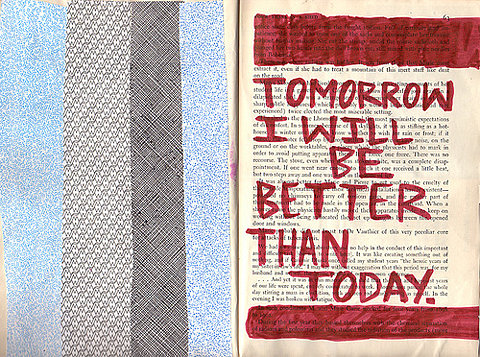
Growth

We have to grow, we have to move forward, to learn and evolve, add to our dictionary of life” – Janet Leigh

If there is no struggle, there is no progress” – Frederick Douglass

All changes, even the most longed for, have their melancholy; for what we leave behind us is part of ourselves; we must die to one life before we can enter another” – Anatole France

Hmmmm. So, I am currently feeling reflective and wondering about progress, personal development and the future. As I’m sure you’ve thought before, this is a very broad and deep topic. The process of growth is seen everywhere: In nature, in children and even in our own lives. When we learn from something and change for the positive, this is growth. While it may sound unthreatening and harmless, I think true growth can be very painful, especially when it concerns the inner-life. Those set of ideas, beliefs, feelings, traditions and thoughts that we consider ‘normal’ often become (or have always been) a hindrance to growth and progress and must therefore be discarded in favour of new ideas and beliefs, more appropriate traditions, and better thoughts, feelings and ideas. This is often very difficult and painful. To realise that something which, up until now, you have considered to be part of who you are needs to be given up is quite shocking. I think it can be likened to losing a good friend. You have memories together, you have ‘history’. In a sense you see yourself as part of that old system, or more accurately you see that old system as being part of who you are (although I suppose these could be one and the same thing). And yet if we are to progress, these realisations must happen many times and in many different ways throughout our lives. A healthy sense of depression will ensue as we mourn for the loss of part of ourselves, but ultimately this is for the good. The comfort we derive from the familiar must give way to the necessity for growth.

Where do we get the strength to deal with these difficulties? To take that first step and assess our situation objectively (searching for the truth irrespective of what it may be) takes tremendous courage and inner strength – where does this come from? I’m not sure. Is it from our personality? Up-bringing? God? Or more realistically a combination of these three.

The above has assumed that we are willing to deal with problems when they arise. This is (unfortunately) not the only option. One could ignore them and hope that they go away ‘da Nile is not just a river in Egypt’. So many people choose this second option of ignoring their problems. They will make up stories, take drugs, get drunk, get in a relationship, all in an effort to avoid dealing with their problems or even more ridiculously in the hope that this will solve their problems. This leaves broken people who propagate broken children and ultimately a screwed-up society of ill-disciplined individuals who cannot grow.

I think two of the most comforting things about being a Christian are: Firstly, that God has told us so much about ourselves, His plan, and how the two interact in the Bible. Secondly, that the true source of determination, ability, motivation, self-control etc is external to ourselves – the Holy Spirit. True and sustained growth is not possible without the Holy Spirit who is that part of the Godhead that is here on earth dwelling with us, helping us, counselling us, leading us and growing us.

In sum, growth is fundamental. We cannot grow without giving up unhelpful parts of ourselves. This is painful and only possible with the help of the Holy Spirit. Just a thought… 🙂

Words

“Words ought to be a little wild for they are the assaults of thought on the unthinking.” – JM Keynes

Keynes – The Secular Prophet

“The decadent international but individualistic capitalism in the hands of which we found ourselves after the war is not a success. It is not intelligent. It is not beautiful. It is not just. It is not virtuous. And it doesn’t deliver the goods.”

“The day is not far off when the economic problem will take the back seat where it belongs, and the arena of the heart and the head will be occupied or reoccupied, by our real problems – the problems of life and of human relations, of creation and behaviour and religion.”

“The ideas of economists and political philosophers, both when they are right and when they are wrong, are more powerful than is commonly understood. Indeed, the world is ruled by little else. Practical men, who believe themselves to be quite exempt from any intellectual influences, are usually the slaves of some defunct economist. Madmen in authority, who hear voices in the air, are distilling their frenzy from some academic scribbler of a few years back… Sooner or later, it is ideas, not vested interests, which are dangerous for good or evil.”

-John Maynard Keynes