Category Archives: Education

Experimentation: The only way to improve education in SA

I am currently doing some research which draws extensively from the work of Rodrik and Hausmann, particularly their “Growth Diagnostics” approach (see especially page 13). In it they talk about the importance of experimentation to figure out what works, often using China as the example par excellence. For example: “Can anyone name the (Western) economists or the piece of research that played an instrumental role in China’s reforms? What about South Korea, Malaysia or Vietnam? In none of these cases did economic research, at least as conventionally understood, play a significant role in shaping development policy…China owes a great deal of its success to a willingness to experiment pragmatically with heterodox solutions…The process of China’s policy reform consisted of diagnosing the nature of the binding constraints and identifying possible remedies in an innovative, experimental fashion with few preconceptions about what works or is appropriate” (Rodrik, 2009). Rodrik then goes on to apply this notion to Randomized Control Trials (see this excellent document on RCTs for policy):

  • “Randomized field experiments, which are legion in this area, have demonstrated considerable success with specific interventions. Importantly, some of these interventions—on school subsidies or remedial education, for example—have been replicated in a number of different contexts (Kremer and Holla, 2009). Still we have very little guidance from this literature on how we proceed to identify education interventions that are most suited to and likely to be most effective in a particular setting. We get even less help on diagnosis in other areas such as reducing corruption or increasing  manufacturing productivity which have received only spotty attention from randomizers. The best among randomized trials in development economics are of course informed by some diagnostic process, but curiously, micro-development economists are often not very explicit about the steps needed to identify the most serious failings in a given context. Nor are they very clear about how one narrows a very large list of potential solutions to a smaller number of interventions most likely to be effective” (Rodrik, 2009: 17).

Now there is much to be said on the application of this kind of logic to South Africa’s education system. If you speak to people who actually know what is going on in South Africa, you will be surprised how much they will admit to not knowing. Should we switch from mother-tongue instruction to English at grade four or grade six, or just go straight-for-English and teach in English from grade one? What is the best method of improving teacher quality in South Africa? Short in-service courses at an academic institution, teacher knowledge tests with incentives, or on-the-job training and coaching (as just a few examples)? What is the best method of raising academic achievement in Grade R and Foundation Phase? Is it graded-readers in an African language? Standardized tests? Teacher training (what training?)? In all of these instances we really don’t know what the answer is, and these are not trivial questions – they are of the utmost importance.

One of the biggest problems is that we are not willing to experiment and figure out what works. Randomized control trials (RCTs) could help us answer these questions by taking a sample of schools (say 300) and randomly allocating 100 to receive graded readers in an African language, 100 where the teachers receive teacher training and coaching, and 100 as a control (against which the ‘impact’ of the other two can be measured). This would help us answer one of the questions above. (Incidentally this is one of the few – perhaps only – RCTs that have been proposed in South Africa for education (by Stephen Taylor et al, currently on the drawing board and looking for funding I think).

One of the reasons why we have so few RCTs underway in South Africa is that RCTs are quite expensive, sometimes between R5-10 million, but not always. This is where we need to take a small diversion and emphasize that when you are spending in excess of R200 000 000 000 (R200bn+) on education, as we do in South Africa, allocating at least R150m per year for about 25 RCTs annually is really just common sense. At the moment I think there is only one RCT looking at education underway in South Africa (looking at the impact of Khan Academy here in the WC), at least that I am aware of. These impact evaluations would allow us to definitively answer questions which we really don’t know the answers to, and without RCTs, may never know the answer to. Unless we can be given the freedom and finances to experiment with reasonable proposals (and implement and test them according to high standards) we will never be able to figure out what works. Experimenting on a small scale (a few hundred schools at a time) and figuring out what works first, before going to scale, is much more sensible and cost-effective than simply rolling out untested policies which is basically our modus operandi at the moment.

The need for experimentation in South African education cannot be overstated. The Department, Presidency and Treasury all need to put their money where their mouth is and get the ball rolling on RCTs – especially in education!!

Some other useful links:

Let go or be dragged…

_zen


So the picture here is in reference to an article I wrote for Youth Day which will hopefully be in one of the papers this weekend (provided the Stellenbosch folk at Ogilvy get crack-a-lacking). But just to make you feel special (whoever you blog-followers might be) this is the opening paragraph:

“This Youth Day three men have the power to change the lives of 12 million South African children, with the stroke of a pen. This may sound like the usual political rhetoric around Youth Day, but I assure you, this is probably the most tangible opportunity of 2013. The idea is simple: provide mobile access to Wikipedia free of data charges.  It isn’t complicated or glamorous, but it would put the world’s knowledge in the hands of millions of South African youths, youths without libraries or computers or the Internet. “What is chlorophyll?”; “Who was Seretse Khama?”; “Where are the Canary Islands?” – four million articles on absolutely everything, all accessible through a cell phone.” 

The three men are the CEOs of Vodacom, MTN and Cell-C. And for the regular interesting reading, see:

Thoughts on the NEEDU 2013 report

sheep


For those who are in-the-know on issues surrounding South African education, you would’ve seen that Nick Taylor (ex-JET and now head of NEEDU) has recently published the first of the NEEDU reports (summarized report here). The GIF above made me think what it must’ve been like researching and writing this report – kudos to Nick & Co! I have now finished the report and these are some of the things that stand out for me:
  • I completely agree with Nick where he says “the quality of teaching and learning is best measured through direct outcomes of learning” – obvious but important to say.
  • I’m glad Nick has chosen to focus on the Foundation Phase and getting the basics of numeracy and literacy right (see this M&G article).
  • I’m also happy that one of the main findings is that teachers often don’t have the competence / subject knowledge to teach and also that the various levels of the bureaucracy are incompetent.
  • It was still based on school visits in 15 districts – there are 86 in South Africa. So it is possible that there are some issues we are missing which are more prominent in some other districts. Also they specifically chose to select districts “from areas of high population inflow” – basically only urban areas, so the validity of the findings for rural areas is sketchy – something which he says on page 5 of the summary report. As I undertand it the next NEEDU report will be for rural areas – great stuff!
  • I’m a little irritated with Angie and her speech to parliament – so much talk about monitoring and evaluation (she even ends her speech talking about it) but then allocates R14mil to NEEDU?!

All in all I think NEEDU is a much needed (and underfunded) evaluation arm of the DBE and this first report is a great start to understanding the binding constraints to education in South Africa.

Important reading…

smash it janet!

We read, we lead.

yes.

  • Powerful video about the effects of bullying (very moving – a must watch) (thanks @ClintClark)
  • Lovely NYT article “Investments in education may be misdirected” – citing James Heckman (who I hero worship) “The angry, worried debate over how to improve the nation’s mediocre education — pitting the teachers’ unions and the advocates of more money for public schools against the champions of school vouchers and standardized tests — is missing the most important part: infants and toddlers.” (thanks @JohanFourie)
  • Insanely talented kids playing the Violin/Cello – see here. I was very moved by watching this – humans are awesome (from Chris Blattman)
  • Nice infographic about Christianity around the world (thanks @DariusMeadon)
  • What Americans keep ignoring about Finland’s school success
  • Tyler Cowen writes a wonderful NYT article about Economics “A profession with an egalitarian core“, I include one quote of his on emigration: “There is an overriding moral issue. Imagine that it is your professional duty to report a cost-benefit analysis of liberalizing immigration policy. You wouldn’t dream of producing a study that counted “men only” or “whites only,” at least not without specific, clearly stated reasons for dividing the data.So why report cost-benefit results only for United States citizens or residents, as is sometimes done in analyses of both international trade and migration? The nation-state is a good practical institution, but it does not provide the final moral delineation of which people count and which do not. So commentators on trade and immigration should stress the cosmopolitan perspective, knowing that the practical imperatives of the nation-state will not be underrepresented in the ensuing debate:”
  • UNESCO guide “Practical tips for teaching multigrade classes
  • After a relaxing weekend with the cool cats from Cape Town I was reminded about a couple interesting websites I’d forgotten about for a while – number27.org (think computer scientist meets fine artist), vine (like 6 second video for Twitter – not sure if this is a fad or the shiz), Kiva.org (only the easiest way to lend small amounts of money to people on the other side of the globe!)

I should’ve been doing research…instead I was doing this…

research

Wednesday reading…

  • The chart above comes from the Learning Metrics Task Force which aims to specify “What every child should know“- think of it as a simplified version of Common Core (which is for America). Amandla! More power to them!
  • Has expanded access to education in Africa had a negative effect on learning?” Blog post by my friend and co-author Stephen Taylor.
  • Tuesday (26 Feb) marked the first meeting of the RESEP education reading group (RESEPERG) where we discussed: Pritchett:& Beatty 2012 “The negative consequences of overambitious curricula in developing countries” – really important conceptual paper showing that the large learning deficits we see in developing countries can partially be explained by a mismatch between the curriculum and where students are actually at – the former usually being much more advanced than the latter. “The usual question is “why are students so far behind the curriculum?” but the more telling question is “why is the curriculum so far ahead of the students?” – worth a read!
  • What most schools don’t teach – why everyone should learn to code (features Gates, Zuckerberg and a couple others).
  • Unnerving 6 minute infographic video showing the extent of income inequality in the U.S (astounding!) – we need something like this for SA [which, for the record, is even more unequal than the US].
  • Great overview of all the cross-national assessments of educational achievement around the world (2012 PDF)
  • I love humans and animals. French artist gives Caddisfly larvae gold and jewels to build their protective cases. See article here.

Weekend reading…

Are you letting the fear of being wrong rob you of being confidence?

  • SA’s Child Gauge 2012 – Suffer the Little Children (Daily Maverick article) – the lived experience of too many South African children is simply unacceptable. But life goes on.
  • Servaas van der Berg (my supervisor) takes on Adcorp “Adcorp’s employment and unemployment figures are not taken seriously by researchers – yet they can do much harm” and see Loane Sharp’s reply here (and Wittenberg and Kerr repeat the most important reasons why we shouldn’t take Adcorp’s figures seriously – see here)
  • Trevor Manuel and Lindiwe Sisulu crack down (at least on paper) on incompetent and corrupt bureaucrats.
  • When Churches act like businesses they shouldn’t be surprised when they get consumers (see here).
  • The ABSOLUTELY shocking state of infrastructure in Limpopo schools – pictures tell a thousand words
  • Interesting newsletter from “Governing Body Foundation” discussing ANA results and some advice for schools (citing our interview with M&G)
  • Bill Easterly brilliant as usual – discussing “The Ideology of Development” from which I draw the quote of the day:
    • The ideology of Development is not only about having experts design your free market for you; it is about having the experts design a comprehensive, technical plan to solve all the problems of the poor. These experts see poverty as a purely technological problem, to be solved by engineering and the natural sciences, ignoring messy social sciences such as economics, politics, and sociology”

Latest presentation on education in SA…

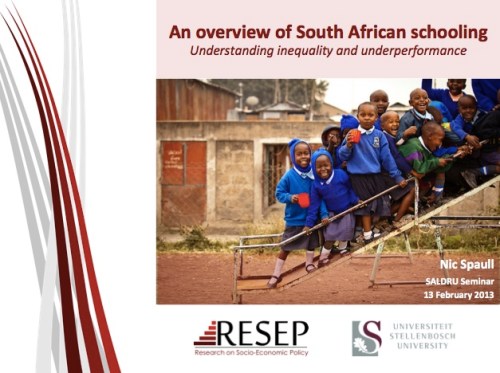
SALDRU presentation

Here are the slides for my recent SALDRU presentation titled “An overview of South African schooling: Understanding inequality and underperformance” (15 Feb 2013) – it has some of my more recent research…

Breezy Saturday reading…

poke the bear


  • Poke the bear – usually good advice when dealing with inefficient bureaucracies whose incompetence weighs especially heavy on the poor.
  • Comprehensive Financial Mail article on education in SA – “SA running out of time to tackle education woes – quotes a number of people from RESEP.
  • Daily Maverick article “Angie Motshekga’s education claims – the true score” – an article which has a few quotes from yours truly 🙂
  • Chris Blattman’s course outlines for his 2013 classes on political economy at Columbia. If only lecturers were as witty, engaging and cool as Chris.
  • Making sense of rising IQ scores – Andreas Schleicher – wise as usual.
  • Maths is important – in case you mistakenly doubted this
  • List of free online open courses
  • A nice Economist article about PISA results and international rankings
    • “A big message is that national culture matters more than the structure of an education system. So the main lesson for policymakers may be to put education at the forefront of the story a nation tells about itself. Countries which do that with conviction and consistency can leapfrog the complacent”
  • Hanushek and Rothstein (2013) article titled “What do international tests really show about US student performance? – interesting article but it begs the question “does controlling for x excuse x being there in the first place?”
  • Nice quote by Coleman commenting on development since the Coleman Report in the US: “What appears to be at the base of the idea of equality of educational opportunity as used by the Court is a public educational system that is sufficiently effective to prevent, for normally intelligent children, the disadvantages that result from their family circumstances from handicapping them severely in adult life, in occupation and otherwise” (Coleman, 1975, p. 28).

    On an unrelated note…today I’m off to a wedding in Tulbagh – yet another corner of paradise.

Educational reading…

  • The most impressive video on educational technology I’ve seen in a long time – also see here. Knewton analytics breaks down a subject into small learning chunks and compares how children interact with each chunk and compares this to the learning trajectories of all other students registered (past and present) allowing it to customize learning for every child. Wow. Scroll down and click on the little Mac screen.
  • Live and interactive feedback from students with smartphones…see here
  • What does the future of education look like? Specifically, how will technology and the Internet influence the future of education. Read here for some interesting predictions. Also see this super impressive map of the future…
  • The top 12 education stories of 2012
  • Interesting honors thesis from Wesleyan University in the States looking at unionism (SADTU) in Umlazi KZN.
  • Quote of the day: “The only calibration that counts is how much heart people invest, how much they ignore their fears of being hurt or caught out or humiliated.” – Ted Hughes via brain pickings

DAMN useful research on matric results

So my good friend and co-author Stephen Taylor (an economist working as an adviser to the Director-General of Basic Education) has finally released a document on some of his research on trends in the matric results – available HERE. It is certainly the most insightful and interesting research coming out of the DBE in AGES. Well worth a read for anyone interested in matric results!

Liberal arts education

.

As we embark on the new year it’s not a bad idea to reflect on why it is that you get a liberal arts education, or any education for that matter…

“It is extremely difficult to stay alert and attentive, instead of getting hypnotized by the constant monologue inside your own head (may be happening right now). Twenty years after my own graduation, I have come gradually to understand that the liberal arts cliché about teaching you how to think is actually shorthand for a much deeper, more serious idea: learning how to think really means learning how to exercise some control over how and what you think. It means being conscious and aware enough to choose what you pay attention to and to choose how you construct meaning from experience. Because if you cannot exercise this kind of choice in adult life, you will be totally hosed. Think of the old cliché about ‘the mind being an excellent servant but a terrible master.’

This, like many clichés, so lame and unexciting on the surface, actually expresses a great and terrible truth. It is not the least bit coincidental that adults who commit suicide with firearms almost always shoot themselves in: the head. They shoot the terrible master. And the truth is that most of these suicides are actually dead long before they pull the trigger.

And I submit that this is what the real, no-bullshit value of your liberal arts education is supposed to be about: how to keep from going through your comfortable, prosperous, respectable adult life dead, unconscious, a slave to your head and to your natural default setting of being uniquely, completely, imperially alone day in and day out.”

-David Foster Wallace

The Bee Eater (Book review)

This was a badly written book about an inspiring woman; Michelle Rhee.  Michelle is a fiery Korean woman raised by immigrant parents in America to be tough and hard working. She fits the stereotype of a typical Asian over-achiever, with one peculiarity – she has a passion for kids and education. After graduating from an Ivy League university she decided to enlist in Teach For America (TFA). For those who don’t know, this is a highly successful American program which takes the best and brightest graduates in any field, gives them basic teacher-training and then places them as teachers in disadvantaged schools. The program is highly regarded and is always over-subscribed. Most TFAs teach for 2 years and then head back to their original career path, usually morphing into a highly-paid cog in the beautiful capitalist machine.

As far as the book is concerned, TFA is where Michelle Rhee cut her teeth on education, learning to manage and teach kids that come from highly dysfunctional and disadvantaged backgrounds. The vignettes about Rhee’s time as a TFA reveal her to be highly motivated, tenacious, capable, creative and original. She takes her best-performing kids on inter-state outings, creates a “shop” where students can exchange credit (awarded for good behaviour/performance) for things like sweets or stationery. One story tells how she literally ate a bumble-bee (hence the Bee-eater) that was disrupting her class, mainly out of sheer frustration at the classes lack of discipline and order in the early stages of her teaching career. The book focuses on her time as the chancellor of Washington DC public schools, where she came in guns blazing and left no stone unturned in her attempt to turn-around the dysfunctional schooling system. She fired hundreds of underperforming teachers who could not improve student learning outcomes.

Some of the take-away points for me were as follows:

  • Vested interests make change difficult. The unions and (surprisingly) the parents resisted Rhee’s reforms, ultimately leading to her being pushed out after her first (productively disruptive) term.
  • Change is possible. In spite of the numerous challenges and obstacles she faced, Rhee managed to win a number of significant victories that are likely to have long-term impacts on education throughout the country, especially holding teachers accountable for student outcomes and challenging the commonly held notion that teachers are unique in the sense that they all deserve tenure. Doing what needed to be done and letting the chips fall where they may made Rhee unpopular but it did get stuff done.
  • Don’t piss too many people off too quickly. If Rhee did it again I imagine she would have done it slightly differently. She would have still implemented all her reforms but would’ve perhaps been more diplomatic about it, and hired a decent PR person (PR people are always necessary when you have high public office).
  • Passion is contagious. Both for the reader and the other personalities in the book, Rhee’s never-say-die attitude combined with intelligence, passion, stubbornness, righteous indignation and the unwavering conviction that change was necessary, made me excited to find out what happened next, and no doubt inspired all around her.

Unfortunately the book isn’t well written which is mildly distracting. By constantly referring to himself in the first person and commenting on almost everything (particularly at the end) the author seems to believe that we care what he thinks – which we don’t, why should we? For those who don’t know him (like me) his unsubstantiated claims about what should or shouldn’t have happened, or who was or wasn’t right are quite irritating and reminded me of first-year essays where students claim all sort of things like “In my opinion, Walmart shouldn’t come to Africa” without substantiation, as if their opinion in the absence of substantiating evidence matters for anything – it doesn’t. As someone who does like to throw in the occasional pronoun, much to my supervisor’s chagrin, I made a mental note to go on a “I-my-diet”. Using the personal pronoun should always be accompanied by reasons for that held belief, and preferably sentences should be structured to exclude them entirely – readers should focus on the content and your characters, not on the author, unless that is the express purpose of the text. Otherwise,  feed your ego elsewhere.

All in all I did enjoy this book – primarily because there are so many parallels with South Africa’s education system. Rhee’s passion, drive and determination ooze off the page and inspire the reader to be likewise. I’d recommend this book to anyone who cares about their country’s education and sees the need for uncomfortable reforms. It will encourage you and remind you that change is possible. Thanks Joy Oliver for recommending this book!

Rhee has subsequently founded StudentsFirst – check it out here.

Thought police…

Think

This is such a great picture that deserves a blog post all its own about the virtues of critical thinking and the need for freedom of speech. Until then here are some articles I’ve read recently and really enjoyed:

  • The power of introverts – Susan Cain. Great TED talk about why our obsession with extroversion is bad for introverts, bad for extroverts, and bad for society.
  • Prof Sean Archer writes an informed and intelligent M&G article about why the private sector needs to be paid more attention as far as job-creation in South Africa goes.
  • The Eastern Cape’s textbook crisis may be worse than Limpopo’s (depressing) – article here
  • Quote of the day “There is a way to critique intelligently and respectfully, without eroding the validity of your disagreement. It boils down to manners“. – Albert Einstein (from Brainpickings).

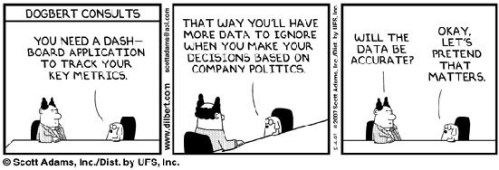
ANA 2011-2012…let’s pretend they’re comparable.

Dilbert cartoon 7 DecSo the results of the Annual National Assessments (ANA) for 2012 were released  on Monday (DBE report available here). Basically national standardized testing for Grades 1-6 and 9. Unfortunately, the Department and the Minister have made explicit comparisons between the ANA’s of 2011 and 2012, in spite of the fact that such comparisons should not be made (the tests are not comparable) and are thus highly misleading. Prof Servaas van der Berg and I were interviewed for this week’s issue of the Mail & Guardian on this exact issue. The interview can be found on the M&G website here, and the full (unedited) transcript can be downloaded HERE. This is a classic case of one step forward two steps back. I include the two most important excerpts from the interview below:

  • Q: In some primary grades there were very large improvements from 2011 to 2012. For example, the Grade 3 literacy improvement from 35% in 2011 to 52% in 2012 – do you have any comment on this? 
  • A: “Yes, we found that particularly strange. All the available evidence suggests that changes of this magnitude are simply not possible, locally or internationally. It may help to provide some background information on the relative magnitude of these increases. The Grade 3 Literacy improvement of 17 percentage points year-on-year (a 49% increase) amounts to 0.70 standard deviations (based on the Grade 3 literacy scores from Verification ANA 2011). If one compares this to the largest improvers around the world, it would mean that South Africa has the fastest improving educational system in the world. If these results were true it would mean we have improved more in a single year than Columbia (0.52 standard deviations) did in 12 years from 1995-2007 – and Columbia was the fastest improving country of the 67 countries tested in TIMSS for this period. Or using a different cross-national survey, we have improved more in a single year than Russia did over the 2001-2006 period (0.54 standard deviations) in the Progress in International Reading and Literacy Study (PIRLS) – and Russia experienced the largest increase in student achievement of the 28 countries tested in PIRLS over this period. This is simply not possible. One could also use local comparisons to provide a sense-check to the ANA 2011-2012 improvement. Every year the Western Cape conducts tests (Systemic Evaluations) of Grade 3 and Grade 6 students. These tests are marked centrally and not by the schools themselves. Between 2011 and 2012 there was almost no improvement in Systemic Test results in the Western Cape, yet according to the ANA results the Western Cape improved by 14 percentage points. Given that the Systemic Tests are calibrated to be of equal difficulty year-on-year, and that they are marked centrally, they are currently a more reliable indicator of true progress in learning than the ANA’s and provide strong evidence that ANA is exaggerating any improvement that there may have been in learning in our schools. Apart from international and local comparisons, the results for ANA 2012 do not appear internally consistent. If the results were calibrated to be of similar difficulty in each grade (which is necessary for inter-grade comparison), how is it possible that the Grade 1 mathematics average in 2012 was 68% but the Grade 3 average was only 41%, just two grades later? The performance further deteriorates to 27% in Grade 6 and a dismal 13% in Grade 9 (for which test results are presented for the first time). Are these tests of equal difficulty for their grade? If so, it would indicate much better performance in the lower than the higher grades. Yet it would seem that there was no inter-grade linking of items, which is necessary to ensure that difficulty levels are similar. This is made explicit in the report: “There was no deliberate attempt to include questions to assess the degree to which the assessment standards of earlier grades had been achieved” (p67). Thus one cannot compare the results of one grade with the next, or say that performance is deteriorating as the grades progress. To put it simply, it is not possible to compare two grades or two points in time unless the difficulty level of the tests are comparable. This can be determined by using Rasch analysis, a technique which requires some items (test questions) to be common across two tests that are being compared so that these can serve as anchors to calculate the difficulty levels of other items and put them on the same scale. After calculating the Rasch scores one can equate the difficulty levels of tests and adjust the marks accordingly. “
  • Q: What are your thoughts on the Annual National Assessments in general – should they be abolished?

     A: “Most certainly not. They must just be improved. The Annual National Assessments are an important and worthwhile endeavour and are needed to improve the quality of education in South Africa. The introduction of these tests is one of the most important advances in educational policy in recent years, as it provides a source of information for teachers, students, parents and policy makers that was absent before. Without a testing system like ANA it is not possible to determine which schools need what help, or to allow us to diagnose and remediate learning problems early enough such that they do not become insurmountable deficits. ANA provides information to teachers about the level they should assess at, and the level of cognitive demand that should aim at. It can provide objective feedback to parents about their children’s performance, which is essential for them to know how the school system serves them and what learning deficits they may have. Parents and children have a right to know this, and poor and illiterate parents doubly so.

    The real problem in our system is the failure of most students to master foundational numeracy and literacy skills in primary school, which then spills over into secondary schools. However, for the ANAs to provide the information on performance in schools, they need to be reliable indicators of learning across grades and over time. To this end the Department should put in place an independent verification process, and tests should adhere to international guidelines for standardised testing. The fact that ANA’s results from 2011 and 2012 are incomparable is highly unfortunate. This means that schools, teachers and parents are getting erroneous feedback. Thus the 2012 ANA results, compared to those of 2011, creates an impression of a remarkable improvement in school performance which did not really occur. This would make it so much more difficult to really induce the improvement in behaviour at the classroom level that is central to real advances in learning outcomes. “

Links I liked…

this is not my life forever

  • Angela Duckworth on Grit (TED) – great talk about why some people succeed and others fail, and that we should be refocusing the discussion away from genius and towards the qualities that lead to “realized genius”
  • Jonathan Jansen on “The Mathematics of Democracy” – Helen Suzman Memorial lecture
  • Quote of the day: “Researchers have a duty to provide more than negative messages and evidence of complexity. There needs to be a meeting point between researchers’ recognition of complexity and practitioners’ hunger for guidance” From here 

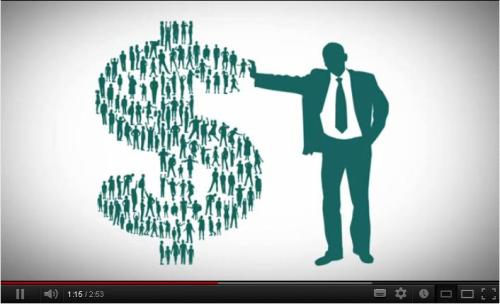
Record inequality between rich and poor


Nice 2.5 minute video explaining the trends in income inequality in OECD countries (click the picture) . Some useful links from Save the Children:

Reading to some purpose…

America Disability Association: Stairs

Articles I’ve read and really enjoyed:

  • Chapter 2 “Economist & Educator” of Beeby’s classic book “The Quality of Education in Developing Countries” – a lovely read for those bridging the two worlds of education and economics.”
  • Why three is the magic number” – Financial Times article about the importance of the 0-3 years phase in a child’s life. Found lots of parallels between this article and the one I wrote on preschool (here)
  • Better Vision for Education: Making eyeglasses available to primary school students in rural China substantially increased test scores – JPAL research brief 
  • And the quote of the dayAnd I submit that this is what the real, no-bullshit value of your liberal arts education is supposed to be about: how to keep from going through your comfortable, prosperous, respectable adult life dead, unconscious, a slave to your head and to your natural default setting of being uniquely, completely, imperially alone day in and day out.” – David Foster Wallace from here)

M&G article – intervene as early as possible

I have an article in this week’s M&G discussing when and how we should intervene to right the wrongs of apartheid. You can read it here. In short, fighting inequality in the labour market will only have limited success because the patterns of who has which skills have already been cemented for many years. Rather we should be intervening as early as possible (preschool) and fighting the generative mechanisms of inequality rather than simply dealing with the effects of those generative mechanisms. Interested to hear people’s thoughts on this…