Category Archives: Links I liked…

Links I liked…

ele

  • The Annual National Assessments for literacy and numeracy (Grades 1-6 and 9) for 2011, 2012 and 2013 are now available for download on the Department of Basic Education’s website. I’m really impressed with the transparency of the DBE and this a great sign going forward. Now I just wish that subject-experts would download the tests and compare the difficulty levels and questions across the years. Is there anyone out there?!
  • The Illustrated guide to a PhD – classic illustration (thanks Hendrik van Broekhuizen)
  • Great 1min video “MOVE” which reminded me that I really need to go and travel again sometime soon! 
  • Where is it illegal to be gay? – great resource from the BBC (thanks @James Dray)
  • Great review of Nina Munk’s damning book (“The Idealist”) about Jeff Sachs and the Millenium Villages project. To his credit, Sachs answered my tweet and we eneded up having a great conversation about development and the meaning of “aid” – see my TL.
  • Random tid-bit of info – for those interested in SA-SAMS, the manuals can be found online here (Thanks Gabi).
  • Wielding Whip and a Hard New Law, Nigeria Tries to ‘Sanitize’ Itself of Gays” – Tragic article from the NYT. Unbelievable what gets done in the name of religion while those who support the religion say nothing. I’m reminded of Burke’s quote: “The only thing necessary for the triumph of evil is for good men to do nothing.”
  • Quote of the week (and very relevant for the discussion on ANAs in South Africa) – Campbell’s Law – “The more any quantitative social indicator (or even some qualitative indicator) is used for social decision-making, the more subject it will be to corruption pressures and the more apt it will be to distort and corrupt the social processes it is intended to monitor.” (thanks Jon Hodgeson)

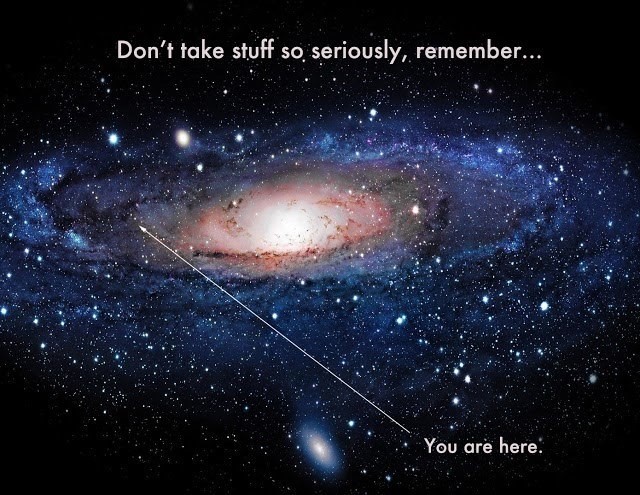
Remember. You are here.

you are here

  • Republicans shut down prefrontal cortex – classic New Yorker article worth a read.
  • I always have time for the erudite Alistair Sparks. In this Business Day article “A crippling disconnection in our economic thinking” he outlines why the status quo isn’t leading anywhere particularly hopeful.
  • Another faux pas of the DBE – they will only use MS Office for Computer Applications Technology (CAT) – i.e. no open source programs allowed. And only Delphi for computer programming, not the sharpest tool in the shed  – see article here.
  • One of the few RCT’s in the field of education in South Africa. Essentially it evaluates the causal impact of the matric Mind The Gap series (PDF here). For background reading on RCTs see this report by the UK government.
  • On the 23rd of September Trevor Manual gave the keynote address at the Growth Week 2013. You can listen to the speech here – I didn’t find it hugely absorbing though.
  • If the U.S media covered the recent shutdown the same way they covered news from other countries, it’d look something like this 🙂 I chortled once or twice…
  • Pic via @PaulaLouise

Welcome to the future…

big history project

  • 21st century education has arrived. The Big History Project (above). Bill Gates throws his weight behind a brilliant history professor and creates an interactive website which has lesson plans, assessments, videos, links, worksheets, and everything you might want when teaching high school history about the big questions in life. So very happy to see this!! Now we just need this for 25 other topics/subjects and we will have a world-class education available to anyone with an internet connection! How exciting.
  • Two photos of the Shanghai skyline taken 26 years apart. Definitely the most incredible image I’ve seen this year. Pictures speak a thousand words.
  • The history of the world since 2000 BC distilled into a single graph – wow. WOW!
  • 40 maps that will help you make sense of the world – incredible!
  • Great 2 minute video animation about the Pale Blue Dot 
  • Great OECD case study on the success of education reform in Brazil: “Brazil: Encouraging lessons from a large federal system
  • Teaching teachers technology – M&G article summarizing the recent EdTech conference in SA.
  • “You become like the 5 people you spend the most time with” This awesome group photo from the Solvay International Conference on Electrons and Protons has 29 people in it, 17 had already won or would go on to win the Nobel Prize. Go Marie Curie!

We read, we lead…

batteries

Some great course outlines for those of you eager to find comprehensive reading lists on curriculum, education in developing countries and the economics of education:


Sunday reading…

the-people-dont-know-their-true-power-tc-cartoon-sad-hill-news


Roundup of Easter…

  • My Masters thesis is now available online. Equity & Efficiency in South African primary schools : a preliminary analysis of SACMEQ III South Africa Although I suspect most people say this, it really is interesting and accessible 🙂
  • Wonderful and insightful article on “The Law’s Majestic Equality” which opens with a quote from Anatole France “The majestic equality of the laws prohibits the rich and the poor alike from sleeping under bridges, begging in the streets and stealing bread” – stimulating read which reminds me of Deuteronomy 1:17 “You shall not be partial in judgement. You shall hear the small and the great alike. You shall not be intimidated by anyone, for the judgement is God’s” Also see Exodus 23:8 and Deuteronomy 16:19. I think I am going to try and include this in my lecture on social policy and inequality.
  • Great Article by Ferial Haffajee on the state of SA’s self-narrative. Attention ANC: We are a serious country with serious potential.
  • Economist article from last year titled “Schooling the whole family: Teaching is improving but slowly. Getting parents involved could speed things up”. So many parallels between Mexico and SA. Many useful ideas in here for discussion and thought-experiments…
  • Jonathan Jansen writes a short article on “Seven costly mistakes” [in SA education since the transition] – mostly just common sense, but people like to listen to him.
  • Charming 2 minute video on organ donation – “Pass it on when you’re done with it” then register to become an organ donor here – it takes 3 minutes and you could drastically improve someone’s quality of life!
  • Innovation in US higher education – the birth of a new Ivy League university “Minerva University” (Economist article) which has as its motto “Critical Wisdom”. We really do need (more ) innovation in higher education across the board.
  • Top ten of urban businesses – sensible futuristic thinking like increasing data use in/by cities and the proliferation of ‘community nodes’ which act as “cafes, wireless work stations, libraries, book stores and micro farmers markets”

Lekker links…

  • Paul Collier reviews Acemoglu & Robinson’s new book “Why Nations Fail”. Very interesting (and firm) prediction about China: “That states need order to prosper is important but no longer controversial. That they need inclusive institutions is, in view of China’s success, wildly controversial. Their argument is that order without inclusive institutions may enable an economy to escape poverty, but will not permit the full ascent to modern prosperity
  • Private schools for the poor – interesting article from the Economist
  • Top 100 best NGO’s – in case you wanted to know…
  • Wisdom from Calvin and Hobbes
  • 50 most influential books of the last 50 years – useful link to have
  • NYT article (22 March) on Cape Town’s racial divide
  • M&G article (23 March) on Stellenbosch University and discrimination.
  • Latest installment (Business Day 19 March) on the Adcorp vs UCT econometricians debate…as well as a detailed response by the UCT guys. You can tell Martin and Andrew had fun writing this with sections titled “Science and Sales”, “Rigor and Rot”, “Openness and obfuscation”, “Models and Moonshine”, and “Errors of differences and indifference to errors” – Adcorp it seems you picked the wrong econometricians to mess with…just saying.
  • Cool music by Ben Howard, the Kongos,

Calvin and Hobbes on the gaping hole in contemporary art’s soul:

Calvin: People always make the mistake of thinking art is created for them. But really, art is a private language for sophisticates to congratulate themselves on their superiority to the rest of the world. As my artist’s statement explains, my work is utterly incomprehensible and is therefore full of deep significance.

N

Some things I’m reading…

    • “When you don’t have resources, you become resourceful.”
    • As the Bible notes, added Schleicher, “Moses arduously led the Jews for 40 years through the desert — just to bring them to the only country in the Middle East that had no oil. But Moses may have gotten it right, after all. Today, Israel has one of the most innovative economies, and its population enjoys a standard of living most of the oil-rich countries in the region are not able to offer.”
  • World Bank’s lead economist for South Africa writes an interesting article on low cost private schools in SA. Intelligent, informed and interesting article asking questions that need to be asked…(also see this FT article on private schools in SA)
  • Equal Education takes Minister of Education to court in an effort to force the Department to establish minimum norms and standards for school infrastructure (MG article). There are many ways to skin a cat – let’s see how this one turns out.
  • Vavi tells teachers to buckle down and change the status quo, albeit in rhetoric of the revolution (can’t we get passed this?)…some interesting stats but not sure what he really wants here.
  • Alain de Botton TED talk A kinder,gentler philosophy of success  “One of the interesting things about success is that we think we know what it means. A lot of the time our ideas about what it would mean to live successfully are not our own. They’re sucked in from other people. And we also suck in messages from everything from the television to advertising to marketing, etcetera. These are hugely powerful forces that define what we want and how we view ourselves. What I want to argue for is not that we should give up on our ideas of success, but that we should make sure that they are our own. We should focus in on our ideas and make sure that we own them, that we’re truly the authors of our own ambitions. Because it’s bad enough not getting what you want, but it’s even worse to have an idea of what it is you want and find out at the end of the journey that it isn’t, in fact, what you wanted all along.”
  • Paul Graham on writing 

Links I liked…

Some more links I liked…
  • Creating a More Equal and Productive Britain” – A lecture by Professor James Heckman. ‘There is hard evidence on soft skills’. Based on a big research project titled “Personality, Psychology and Economics
  • Rethinking School – a Harvard Business Review article about American K-12 education. Explains the importance of good teachers and how Americans should use new technologies and teaching methods in their classrooms. Still wondering about the links with SA and whether technology can be used to leapfrog educational development steps in South Africa – if only…
  • Why is research higher status than teaching? An interesting article by a Canadian economist. The one quip I really liked was the following on peer review:

 “Some might say this is the best way to measure research productivity. After all, how can we, as outsiders, judge the rigor and relevance of research outside our own specialized discipline? Peer review is the sine qua non, the best and only test of research excellence. I have some sympathy for this view – although it must be confessed that, sometimes, peers are idiots.