Category Archives: Education

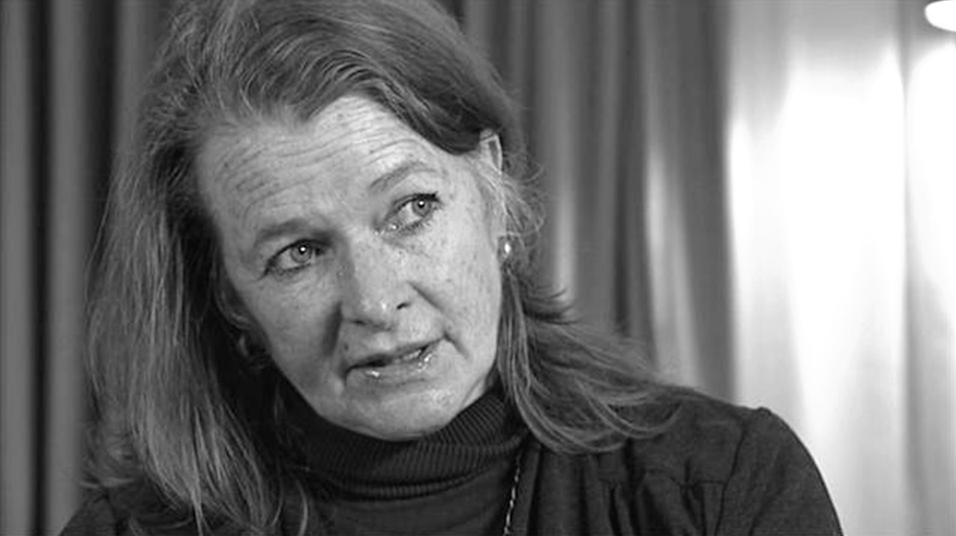
Q&A with Mary Metcalfe

Mary2

The aim of the Q&A series is to get an inside look into some of South Africa’s leading education academics, policy-makers and activists. We start the series with Professor Mary Metcalfe…  

1)   Why did you decide to go into education?

“Originally it was the only way that I could get funding to study – a teaching bursary.  Although the broad field of education was not inconsistent with my fundamental interest in social service, I have stayed in education for 40 years  – I started teaching unqualified.

2)   What does your average week look like during the semester?

 I am a visiting adjunct professor at Wits PDM, but I only go there when I see postgraduate students for supervision.  I currently spend all of my time on PILO (the Programme to Improve Learning Outcomes), and on my work as Chair of the Education Advisory Board of the Open Society Foundations.  The latter keeps me traveling often during the year.  PILO keeps me busy in the Northern Cape and in KZN.   This means many early morning flights and late evening returns.  I tend to have very long working days and working weekends.  I usually work in the evening listening to music, and try to stop working an hour or so before I sleep – or my mind is still racing and I can’t sleep!

3)   While I’m sure you’ve read many books and articles in your career, if you had to pick one or two that have been especially influential for you which one or two would they be and why?

Most recently, the person who changed my thinking a great deal has been Richard Elmore.  I couldn’t accept his notions of opening the teaching space at first glance – my professional education was deeply rooted in the independent professional judgement of the educator.  It took some thinking to realize that this is actually a deeper professionalism.

4)   Who do you think are the current two or three most influential/eminent thinkers in your field?

Linda Darling-Hammond, Ben Levin, and Helen Timperley 

5)   What do you think is the most under-researched area in South African education?

The social context of secondary schooling and how this impacts on learning and retention – dropout, self-esteem, and the consequences of this for families.

6) If you could highlight one of the pieces of advice you regularly give your students, what would it be?  

I’m not sure that I have said anything stupendous.  I am very keen for students to construct arguments well and to be able to use the literature to do so without losing their own voice.

7)   If you ended up sitting next to the Minister of Education on a plane and she asked you what you think are the three biggest challenges facing South African education today, what would you say?

  1. To understand the constitutional framework for the roles and responsibilities of the national and provincial departments of education.  Norms and Standards are a critical instrument and have not been adequately used as an instrument for accountability, planning, and to create justifications for the financing to achieve the careful plans developed at provincial level. It is the provincial plans that matter, and it would be great if the national department used the norms and standards component of the South African Schools Act to assess these plans. Norms and Standards can be set for a variety of key elements of quality – and the provinces should report as envisaged in the Act.  Where there are careful plans with capacity, the funds might follow.
  2. I’d also highlight the internal efficiency of the system.   We are running short of funding – the personnel share is growing which has dire consequences for quality – and there is too much wastage in the system. Poor quality results in repetition, failure and drop out.  We need to move on the Grade 10 exam so that young people who leave before NSC have a credential, and to take the pressure off of the NSC which must assess so much.  
  3. A sense of hope amongst teachers that they will be supported – that they will be helped with the problems that they face. 

8)   If you weren’t in education what do you think you would be doing?

I have stayed in education because I believe that it is the key mechanism to change lives, and build development. Nothing can do this better.

9)   Technology in education going forward – are you a fan or a sceptic?

A great fan.  I think about this a lot and try to keep up to date.  In PILO we are using technology in some interesting ways – but it is “over-sold and underused” as Cuban has said.  Capacity must be there for the entire value chain, and there must be thorough M and E. We must insist on open education resources wherever possible, and work towards technology being an instrument of achieving equality.”

//

Some of the other academics on my “to-interview” list include Brahm Fleisch, Servaas van der Berg, Martin Gustafsson, Veronica McKay, Hamsa Venkatakrishnan, Ursula Hoadley and Stephen Taylor. If you have any other suggestions drop me a mail and I’ll see what I can do.

SACMEQ data archive available for download

sacmeq

The SACMEQ data for 14 sub-Saharan African countries is now available for download for anyone who registers on the SACMEQ website (it only takes 5 minutes). This is a tremendously rich dataset and I’d encourage anyone who is interested in the quality of education in Africa to download it and explore. For some background reading I’d recommend the following:

Links I liked…

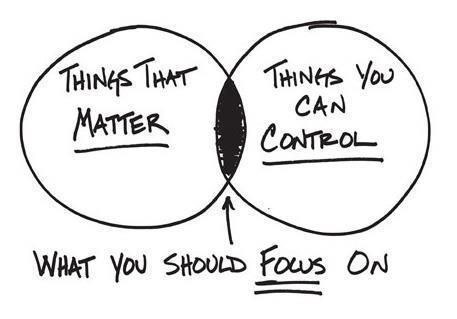
venn matters

  • As far as intellectual crushes go, I am a huge fan of Bill Easterly – listen to his EconTalk podcast on benevolent autocrats
  • The richest 300 people in the world have the same wealth as the poorest 3000,000,000 (3 billion) – absolutely illuminating and truly scary 3 minute infographic video
  • Sad day for LGBT rights in Nigeria as President Goodluck Jonathan bans same-sex marriage in the country.
  • Political prophet Alistair Sparks writes an insightful piece on what another 5 years of Zuma means for the ANC and South Africa.
  • Chart showing Africa from an LGBT rights perspective. Just another way that South African is different to the rest of Africa – it respects the rights of minorities irrespective of the size of the majority.
  • US parents are 2.5 times more likely to ask Google “Is my son gifted?” than “Is my daughter gifted” – NYT article showing the ongoing legacy of gender inequality and patriarchy.
  • Causal evidence that secular education reduces religiosity among girls in Turkey – no surprises there folks (see NBER paper here).
  • SAFM Forum at 8 – the podcast from my radio discussion on “Back to School
  • Given the jamboree around the matric 2013 results I found myself on TV a few times this month 1) School dropout in South Africa: 550,000 – eNCA, 2) Teacher content knowledge in South Africa – News24, 3) Mathematics literacy in South Africa – News24. Fun times!
  • Mweli Mathanzima (acting DDG for curriculum) wrote a response to my article (ANA results are not comparable), his article titled “No ANA mess, they’re a success.” I’m still contemplating if I want to right a reply to his reply but I think I will wait for the inspiration to hit. The main criticism I have (encapsulated in the title of my article) is that the Minister should not be claiming “improvements” using ANA changes year on year – something that Mweli does not address. The question is pretty straight-forward, does he agree or disagree with the Minister that the ANA results prove that things are improving? The short answer is that they CANNOT be used to show improvements or deterioration because they aren’t psychometrically calibrated to be compared year on year…anyways I’ll probably write a short reply sometime.
  • The DBE has called for comment on its new policy “Incremental introduction of African Languages Policy” and asked for comment. If you feel strongly about the potential upsides/downsides then the call for public comment closes on the 12th of Feb.

Education in SA – Still separate and unequal (Extended version of CityPress article)

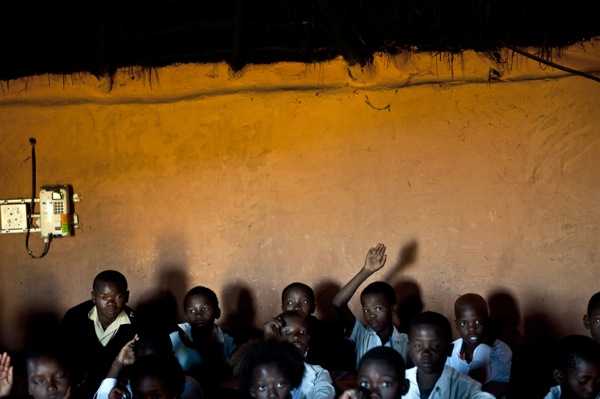
Mud schools, no lights or electricity, overcrowded. Madelene Cronjé

[The article below is an extended version of my article published in CityPress on the 12th of January 2014]

When the matric results were released on Monday this week, the Deputy Minister of Education Enver Surty chastised us in academia for “denigrating” the schooling system, claiming that now is not the time for pessimistic criticism but rather for celebration and “inspiring hope”. The Deputy Minister will have to forgive me because I find it incredibly difficut to celebrate when no one is really acknowledging the 550,000 students who started school 12 years ago but have been silently excluded from the schooling system, dropping out before matric. To be specific, of 100 students that started school 12 years ago, only 51 made it to matric in 2013, 40 passed and 16 qualified to go to university. These youth that drop out before matric are completely marginalized and pushed to the fringe of society, forgotten amidst the hype of those who passed. Minister Motshekga is no exception. In her 5000 word speech, she devoted all of 10 words to discussing the issue: “The sector needs to urgently reduce repetition and dropout  drastically.” That’s it. Two strong adjectives and a hat tip?

I’ve been told  by some that now is not the right time to talk about this. But when is the right time to talk about it? June? September? It’s never comfortable or convenient to talk about half a million children dropping out of school and facing unemployment or menial work – something that happens year in and year out.

By not addressing drop out and repetition Minister Motshekga did a disservice to the country, but perhaps even more disturbing were the sweeping statements that fly in the face of hundreds of research reports on South African education. In discussing the results the Minister claimed that: “Contrary to what some would like the nation and the public to believe – that our results hide inequalities, the facts and evidence show that the two top provinces (Free State and North West) are rural and poor…The truth is in terms of learning outcomes in the sector, education remains an equalizer between poor and rich.”

To address the second part of this statement first, if South Africa’s education is an “equalizer” between poor and rich, why is it that South Africa’s income inequality has increased since the transition? While it is certainly true that if quality education is offered to rich and poor alike it will lead to a situation of increased social mobility, this is not the case in South Africa. In South Africa we have two public schooling systems: one which is functional, wealthy, and able to educate students (about 25% of public schools); with the other being poor, dysfunctional, and unable to equip students with the necessary knowledge and skills they should be acquiring in their schooling career (roughly 75% of public schools).

Apart from a small minority, most black children continue to receive an education which condemns them to the underclass of South African society, where poverty and unemployment are the norm, not the exception. This substandard education does not develop their talents and abilities or expand their economic opportunities, but instead denies them dignified employment and undermines their own sense of self-worth. In short, poor school performance in South Africa reinforces social inequality and leads to a situation where children inherit the social station of their parents, irrespective of their motivation or ability. That is how income inequality increases.

The second part of her statement – that matric results do not hide inequalities – is also patently untrue. The matric results, like every other educational data set in South Africa, hide enormous inequalities that sometimes aren’t immediately apparent. Before getting to the matric 2013 results, let me summarize some of the findings from the numerous studies highlighting South Africa’s ongoing educational inequalities: 1) The SACMEQ study of 2007 showed that there are huge geographic inequalities in the country with 41% of rural Grade 6 children being functionally illiterate compared to only 13% of urban grade 6 children. The prePIRLS study of 2011 showed the large linguistic inequalities exist: Of those children whose home language was Xitsonga, Tshivenda or Sepedi, one in two (50%) could not read by the end of Grade 4 compared to one in ten (11%) for English and Afrikaans children, and 3) The General Household Survey of 2011 showed that there are large racial inequalities in matric attainment: only 44% of Black and Coloured youth aged 23-24 had attained matric compared to 83% of Indian youth and 88% of White youth. We could also look at the TIMSS study of 2011 or the NSES study of 2009 or any of the Annual National Assessments or a host of others – they all show the same thing – systemic inequalities and underperformance.

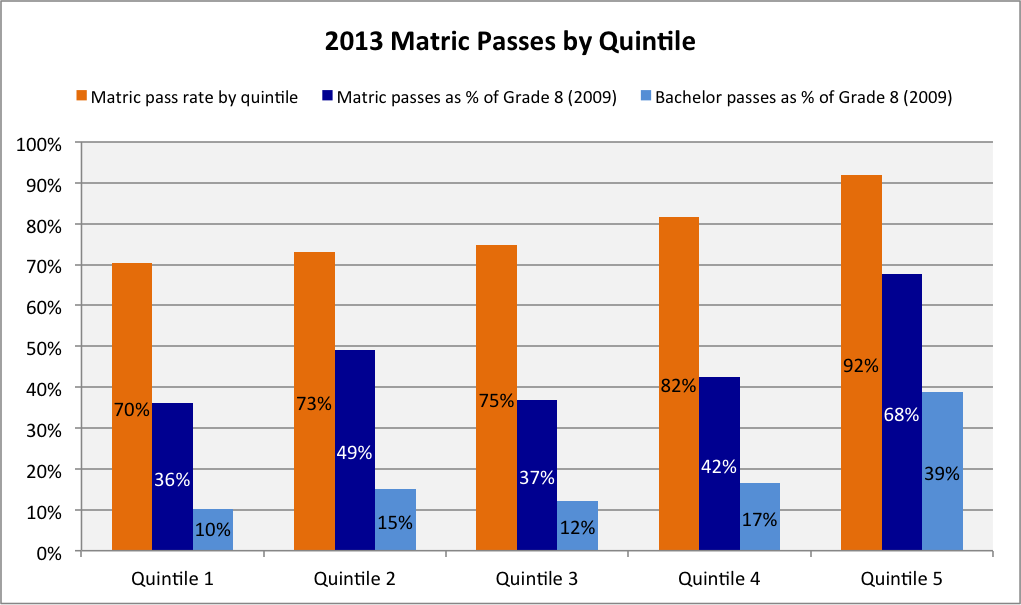
But if we take a closer look at the matric results for 2013 we will see that they too hide severe inequalities. When allocating funding to schools, the Department classifies them into one of five categories called quintiles. Each quintile is meant to have 20% of schools ranging from Quintile 1 (the poorest 20% of schools) all the way up to Quintile 5 (the richest 20% of schools). The funding allocations are pro-poor with Quintile 1 schools receiving R905 per learner and higher quintiles receiving progressively less funding all the way up to Quintile 5 schools which receive R156 per learner. On the surface the differences between the matric pass rate by quintile are not too large with 70% of matrics from Quintile 1 passing and 92% of matrics from Quintile 5 passing. But this hides the fact that pre-matric dropout is twice as high in Quintile 1 compared to Quintile 5. If we looked at the number of enrolments in Grade 8 in 2009 (i.e. when the matric 2013 class was in Grade 8) there were 206,031 students in Quintile 1 schools and 141,905 students in Quintile 5 schools (the numbers are not equal between quintiles because schools prefer to be classified in lower quintiles to receive higher subsidies). But by the time they got to matric there were only 105,954 Quintile 1 matrics and 104,344 Quintile 5 matrics. That is to say that 49% of Quintile 1 students dropped out between Grade 8 and Grade 12 but only 26% of Quintile 5 students dropped out between Grade 8 and Grade 12. So if we rather calculate the matric pass rate as a percentage of those enrolled in Grade 8 four years earlier the figures change drastically being 36% in Quintile 1 and 68% in Quintile 5, i.e. of 100 Grade 8 Quintile 1 students, only 36 made it to matric and passed. Of 100 Grade 8 Quintile 5 students, 68 made it to matric and passed. Similarly, the proportion receiving bachelor passes by quintile is only 36% for Quintile 1 matrics and 68% for Quintile 5 matrics But if we calculate it as a percentage of Grade 8 enrolments four years earlier the figures drop to an abysmal 10% for Quintile 1 and 39% for Quintile 5. As a proportion, the number of Quintile 5 students in Grade 8 that will go on to pass matric with a bachelor’s pass is four times higher than that for Quintile 1 students. These shocking results are not limited only to Quintile 1 – the graph shows that the results are very similar in Quintiles 2, 3 and 4.

quintile

In highlighting these results it is not my intention to be the prophet of doom of South African education. I actually do think things are improving and we should give praise where it is due. Minister Motshekga has presided over a number of very important reforms including the introduction of the Annual National Assessments (ANAs), the implementation of Curriculum Assessment Policy Statement (CAPS), the roll out of the workbooks and the establishment of NEEDU. By focussing on the basics the Minister has laid the foundation for improvement and I agree that we are beginning to see the fruits of these efforts. Because of this I also happen to think she is the best  Minister of Education we have had to date. But to claim that the results do not hide inequalities is absolutely unforgiveable. If there is one thing that is clear from the local and international research on South African education it is that our schooling system is egregiously unequal. That finding is simply not up for debate.

While the low-level equilibrium that South Africa finds itself in has its roots in the apartheid regime of institutionalised inequality, this fact does not absolve the current administration from its responsibility to provide a quality education to every South African child, not only the rich. Until such a time as the Department of Basic Education and the ruling administration are willing to seriously address the underlying issues in South African education, at whatever political or economic cost, the existing patterns of underperformance and inequality will remain unabated.

Nic Spaull is an education researcher in the Economics Department at Stellenbosch University. He blogs about education research at www.nicspaull.com and he can be followed on Twitter @NicSpaull

Additional reading:

Matric is failing SA’s lost children (M&G article)

matric


[This article first appeared in the Mail & Guardian on the 10th of January and is available on their website here]

Although the matric exams are an important institution in South Africa, they should not be used as the primary indicator of school-system performance.

When speaking about the state of education in South Africa it is both conventional and convenient to talk about the matric pass rate. This figure is easy to understand; it is published every year in all national media – and it is very misleading.

Although the matric exams are an important institution in South Africa – notably because they are quality assured by an independent body, Umalusi – they should not be used as the primary indicator of school-system performance. Matric results provide useful information for those  who reach and write matric, but tell us nothing about the more than 500 000 pupils who started school in 2002 but never reached matric, let alone passed.

The tale of the matric results is a story half-told.

If we look at the matric class of 2013, there were 562 112 full-time candidates, of whom 439 779 passed, yielding a matric pass rate of 78.2%. But how many pupils were there to begin with? If we look at the 2013 grade 12 cohort, we see that there were as many as 1 111 858 pupils in grade two (in 2003), 1 094 189 in grade 10 (in 2011) – but only 562 112 in grade 12 (in 2013). What happened to the other 549 746 that never made it to matric? Most dropped out in grade 10 and 11.

Rather than calculate the matric pass rate as the number who pass matric divided by those who wrote matric (that is, 439 779 divided by 562 112), what would the 2013 figure be if we instead calculated the number who pass matric divided by those who started school 12 years earlier (439 779 divided by 1 111 858). I use grade two figures rather than grade one because grade two is a better indication of the true size of the cohort, given the excess repetition we have in grade one.

The calculation I am suggesting we do yields a truly shocking cohort matric pass rate: 40%! That is to say, of every 100 pupils who started school, only 51 made it to matric in 2013, 40 passed and 16 qualified to attend university.

This analysis shows how the normal way of calculating the pass rate, which as we know yielded 78.2%, shrouds the reality that half of the cohort never reached matric, let alone passed.

Discussing the matric pass rate without also mentioning that hundreds of thousands of pupils drop out in grades 10 and 11, and thus never make it to matric, is disingenuous, misleading and disregards those children marginalised by the schooling system.

Although I would like to celebrate with the pupils who passed their matric exams, I find myself asking: “Who is going to speak up for the 550 000 children who started school 12 years ago, but have been silently excluded because of drop out? Given that we have no reliable pre-matric exam, what educational qualification do these children have?” Absolutely nothing. They are the first ones to fill the ranks of the unemployed, leading to a staggering unemployment rate of 50% – twice the national average – among youth (those from 18 to 24 years old).

Relative to other developing countries, South Africa actually has a higher than average proportion of pupils entering upper secondary school and an average proportion entering the last grade (grade 12). Yet the proportion that successfully completes secondary school is well below average for similar developing countries.

In South Africa only 40% of a cohort will graduate from upper secondary school, compared with much higher figures in Turkey (53%), Brazil (67%) and Chile (72%). This also explains why South Africa has comparatively few youth who reach and complete post-school education. Fewer than 10% of youths in South Africa attain 15 years of education (completion of a three-year degree, for example), compared with at least 15% in Columbia and Peru and 24% in the Philippines and Egypt.

Similar findings have previously been published, and numerous researchers have provided convincing explanations for the South African dilemma, particularly the analyses of Stellenbosch University academic Martin Gustafsson. His research points to four major factors: the low quality of primary and secondary education, financial constraints, teenage pregnancy and the lack of vocational opportunities.

The department of basic education has already begun to implement policies aimed at addressing these problems. These include:

  • Introducing an externally evaluated grade 9 exam over the next three years;
  • Implementation of the standardised Annual National Assessments, which test grades one to six and nine in numeracy and literacy (introducing these assessments has been a truly historic achievement, even though they do still have many problems);
  • Almost universal (99%) delivery of textbooks for this year;
  • The creation, publication and distribution of workbooks to all schools; and
  • Basic Education Minister Angie Motshekga’s finalising late last year of sensible minimum norms and standards for school infrastructure and her wisely chosen phased-in approach for their implementation.

We often overlook these quiet achievements when we are confronted with the shocking and unrelenting statistics of abysmal underperformance. The foundations are being laid for improvement and progress, but much, much more needs to be done if we are to achieve even our least ambitious goals.

I think there are three main points that summarise the concerns identified here and point the way forward:

  1. Placing excess attention on the matric pass rate is politically expedient, but educationally unsound; the real focus needs to be on the universal acquisition of basic skills in primary school and the quality of secondary schooling;
  2. The lack of any trustworthy pre-matric qualification means that most youths have no widely recognised proof of their educational status; and
  3. Pushing students through the schooling system in the absence of meaningful learning and external standardised assessments is detrimental to the students concerned and to the education system more generally.

We need to move beyond a single-minded and shortsighted focus on the matric pass rate and instead start focusing on the quality of primary and secondary schooling.

Looking more broadly, as we approach general elections this year, we can only hope that those in the corridors of power prioritise service delivery to the poor over patronage of the elite, accountability over cadre leniency and, perhaps most importantly, new and innovative ways of raising the quality of the teaching force. As research has shown time and again, no education system can exceed the quality of its teachers.

Nic Spaull is a researcher in the economics department at Stellenbosch University. His education-focused research can be found at nicspaull.com/research, and he can be followed on Twitter

The importance of matric/degrees for employment in SA

Census 2011 25-35 years olds

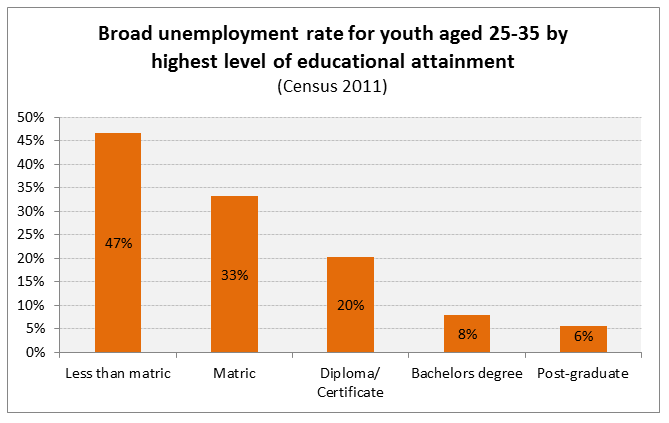
The above table was calculated from the Census 2011 data (thanks Hendrik Van Broekhuizen for his supercross skills) and reflects the employment status of those aged 25-35 years old in 2011. From the table it’s clear that those with higher levels of education are more likely to participate, more likely to be employed, and less likely to be discouraged. Only 39% of those who do not obtain matric were employed compared to 82% of those with a degree. It’s important to remember that the vast majority of the youth do not have degrees. For every one 25-35 year old that had a degree there were 11 who did not even have a matric. Given that this is for the 25-35 year old cohort (as at 2011), it’s not clear what the picture will be for the matrics of 2013. What we do know is that there have been worsening labour market prospects for those with matric, combined with a situation where more and more youth have a matric certificate. Consequently, it is understandable that many South African universities are now supplementing the NSC results with NBT test results when determining who gets into what programs. To get into UCT Engineering, for example, the admission points from the NBTs and those from the NSC are weighted equally. Even a cursory glance at the media coverage of the 2013 matric results would lead one to think that the days of blind faith in the quality of the matric certificate are rapidly coming to an end.

broad unempl

M&G article on testing matric markers

graphic-markers5edit

Today the Mail & Guardian published an article I wrote for them on the issue of testing matric markers prior to appointment. I include the article verbatim below…

Matric assessment misses the mark

22 NOV 2013 10:42 NIC SPAULL

Every year for the past three years the department of basic education has tried — unsuccessfully — to implement competency tests for matric markers. Each year the teacher unions derail these well-intentioned plans, with the South African Democratic Teachers’ Union (Sadtu) raising the biggest ruckus. 

The department’s logic is flawless: the integrity of the marking and moderation procedures of the National Senior Certificate exam depends crucially on the ability of markers to assess student responses accurately. Furthermore, without directly testing the content knowledge and marking competency of teachers one cannot be sure that the quality of matric markers is such that matric pupils receive the marks they deserve.

Importantly, the tests the department proposes would be conducted in a confidential, dignified and equitable manner that would not undermine the professionalism of applicants.

Sadtu counters that all teachers are equally capable of marking the matric exams and thus there is no need for minimum competency tests for prospective markers. This flies in the face of everything we know about teachers’ content knowledge and the pedagogical skills of large parts of the South African education system.

In a 1999 book, Getting Learning Right, Penny Vinjevold and Nick Taylor summarised the results of 54 studies commissioned by the Joint Education Trust, and wrote: “The most definite point of convergence across the President’s Education Initiative studies is the conclusion that teachers’ poor conceptual knowledge of the subjects they are teaching is a fundamental constraint on the quality of teaching and learning activities, and consequently on the quality of learning outcomes.” By implication this includes their ability to mark complex material accurately. 

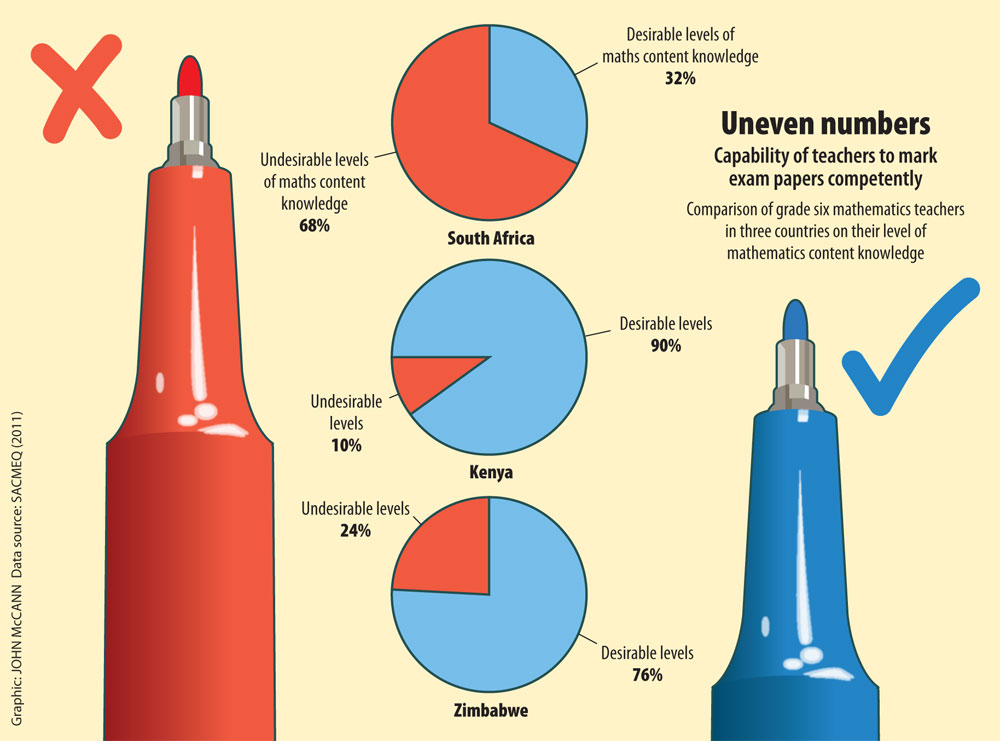
More recently, a 2011 report [p13] by the Southern and Eastern African Consortium for Monitoring Educational Quality found that only 32% of grade six mathematics teachers in South Africa had desirable levels of mathematics content knowledge, compared with 90% in Kenya and 76% in Zimbabwe.

Similar findings
I could go on and mention the numerous provincial studies that have been conducted in the North West, the Eastern Cape, KwaZulu-Natal and elsewhere that all find the same thing — extremely low levels of teacher content knowledge in the weakest parts of the schooling system — which, crucially, make up the majority of South Africa’s schools.

Given this situation, one wonders how Sadtu can argue that all matric teachers are equally competent to mark the matric exams or that they should not be tested. The union stance is that a system of teacher testing will disadvantage teachers from poor schools who cannot compete with those from wealthier schools. Although it is certainly true that the department has failed to provide meaningful learning opportunities to teachers in these underperforming schools, jeopardising the marks of matric pupils to make this stand is misguided, unethical and potentially even illegal.

These are important but separate issues and should be dealt with in different forums. But it is worth noting that the Western Cape has been testing prospective matric markers in the province since 2011, the only province in the country to do so.

The logic of the unions on this matter is perplexing. On numerous occasions they have rightly argued that teachers in poorer schools have not had meaningful learning opportunities and, therefore, that teachers are unequally prepared to teach, and by implication also unequally prepared to mark. Yet now they are arguing that all matric teachers are equally capable of marking the matric exams? So which is it? You can’t have it both ways. They either are or are not equally competent to mark matric exams. If it is the former, one cannot ensure children will receive the marks they are due; and if it is the latter, then one simply cannot argue that teachers should not be assessed prior to being appointed as markers.

On this question, a colleague of mine asked the following question: “How does the department employ people to teach matric when they are not considered competent to mark?” The uncomfortable answer is that, unfortunately, many matric teachers are neither competent to mark nor to teach — and this is because of no fault of their own. The blame instead falls squarely at the feet of the department, which has not provided them with quality professional development opportunities.

If one looks at the specifics of appointing matric markers, the union objections become even more bizarre. Although all matric teachers are legally allowed to apply to be matric markers, who is appointed and the criteria used for making these appointments are solely at the department’s discretion. Provided that these criteria are aligned with the position and are not discriminatory on such grounds as race, gender and sexual orientation, the department can select whomever it decides is most capable of doing the job.

Selection criteria
Currently the selection criteria relate to qualifications, teaching experience and language proficiency, but — bizarrely — not content knowledge. Given the nature of the work — assessing student responses for grading purposes — it seems only logical that applicants should be able to demonstrate this competency prior to being appointed for possessing it.

Because of the importance of the matric exam’s results for the life chances of individual pupils both in terms of further education opportunities and labour-market prospects, the department should put its foot down and take a stand for the 700 000 or so part-time and full-time students who are writing matric this year: it should insist that the 30 000-odd matric markers be tested prior to appointment.

Pupils, parents and school governing bodies have every reason to be concerned when there is no formal testing process to ensure that the teachers who will mark their all-important matric exams have the competence to do so in a consistent, fair and unbiased manner. Whether or not competency tests for matric markers are implemented has nothing to do with the unions and everything to do with the fairness of the marking and moderation procedures.

In sum, should prospective matric markers be tested prior to appointment? Yes. Is this a union issue? No. Will this be the last we hear of it? Unfortunately not.

Nic Spaull is a researcher in the economics department at Stellenbosch University. His education-focused research can be found at nicspaull.com/research. Follow him on Twitter @NicSpaull

**Regarding the infographic above, while the stats are correct the textbox on the right stating “capability of teachers to mark exam papers competently” is a little misleading since the test assessed only the content knowledge of Grade 6 mathematics teachers, not their marking competence per se. That being said, they are obviously linked. No harm no foul 🙂

Media coverage :)

Mud schools, no lights or electricity, overcrowded. Madelene Cronjé


This should be going up on the RESEP website sometime today – just a summary of media coverage of my CDE report:

RESEP researcher’s education report receives media attention 

A recently published research report on the state of the South African schooling system over the 1994-2011 period has received widespread media attention over the last month. The 65-page report titled “South Africa’s Education Crisis: The Quality of Education in South Africa 1994-2011” by RESEP researcher Nic Spaull was commissioned by the Centre for Development and Enterprise (CDE). One newspaper highlighted the low levels of teacher content knowledge discussed in the report (City Press: “Grade 6 pupils beat teachers at maths“). The Mail & Guardian focussed on the learning deficits that children acquire which prevent further learning at school: “For pupils who fail to grasp basic maths and reading skills in their early years, learning deficits accumulate over time until they eventually become ‘insurmountable.’ Similarly, The Times identified the high levels of grade repetition and automatic progression that plague the South African system: “Just because a child proceeds to a higher grade does not necessarily mean that he is learning. In the absence of proper standardised exams, the links between progression and real learning are very weak. This is the case in South Africa.” Nic also discussed the report on PowerFM, CapeTalk and CNBC Africa.
The report included sections on the inequality of learning outcomes in South Africa, as well as learning deficits, teacher content knowledge, matric outcomes, and transitions from school to work. The report concludes with a set of policy recommendations including 1) making the Annual National Assessments reliable, 2) implementing a nation-wide system of minimum-proficiency diagnostic teacher testing and capacitation, 3) increasing accountability at all levels of the system, 4) increasing the technical capacity and implementation ability of the Department of Basic Education, and 5) set realistic goals that focus on the universal acquisition of basic skills.
Nic’s research can be found here and the full report can be downloaded here.

Language(s) of learning in South Africa

Mud schools, no lights or electricity, overcrowded. Madelene Cronjé

One of the perennial issues that arises when discussing South African education is our complex language policy. For those who aren’t from South Africa, we have 11 official languages – Afrikaans, English, isiNdebele, isiXhosa, isiZulu, Sesotho sa Leboa, Sesotho, Setswana, siSwati, Tshivenda, and Xitsonga. What happens in South African schools is that children usually learn in their mother-tongue for the first three years (Grades 1-3) then switch to either English or Afrikaans in Grade 4 and continue with that language for the rest of their schooling career.  Although this is what government recommends, many parents choose to send their children to straight-for-English schools (i.e. English from day 1), and this is especially true for wealthier parents. This situation gives rise to a number of questions like when and how one should transition to English. Two friends (and colleagues) of mine have recently completed a Working Paper (“Estimating the impact of language of instruction in South African primary schools: A fixed effects approach“) which is well worth the read – methodologically interesting and highly policy-relevant, the very thing we need more of in South Africa. For those less interested in fixed effects and more inclined to scroll to their conclusions, you’re better off reading a Mail & Guardian article they wrote last week which I am going to include verbatim below because I think it is a truly excellent article! Enjoy the read…

(Update: Sara Muller provides a useful summary of some the qualitative research on language of learning and teaching in SA here – go check it out.)

//

[The following article appeared in the Mail & Guardian on the 18th of October]

//

Mother-tongue classrooms give a better boost to English study later  Stephen Taylor & Marisa Coetzee

What language should South African children be taught in? The ongoing debates about the language of instruction in schools evoke strong (and often emotional) responses, as has again been seen in the various contributions in the media during the past two weeks.However, these responses are seldom backed by evidence. A more scientific approach is required to address such an explosive topic and this week we released a working paper that we believe offers this.

English first?

First, though, some background. In his recent Percy Baneshik Memorial Lecture to the English Academy of South Africa, Professor Jonathan Jansen recommends the introduction of English as the language of instruction as early as possible (“Wrest power from English tyranny“, Mail & Guardian, October 4). As Jansen observes, many black parents recognise that English proficiency is important for successful participation in the economy, and therefore conclude that their children should be instructed in English. But this conclusion rests on a key assumption: “Instruction in English from as early as possible is the best way to become fluent in English.”

At first this seems like a fair assumption to make: Surely the earlier you start with English the better? Doesn’t practice make perfect?However, most linguistic theory doesn’t agree. Many linguists argue that when it comes to learning a second language it is crucial to first have a solid foundation in one’s first language. These theories predict that several years of mother-tongue instruction will lead to better second-language acquisition than being instructed in that second language from the first day of school. So education policymakers in countries with multiple home languages, such as South Africa, have a dilemma. The goal is to optimise educational outcomes, which include English fluency, mother-tongue fluency and skills in other subject areas, for pupils whose first language is not English but how does one best achieve this?

The choice is between English instruction from grade one or starting with mother-tongue instruction and transitioning to English as the language of instruction at a later grade. Although there is a lot of theory about this, there is very little empirical evidence on the causal impact of these alternative instructional models. As researchers focused on education in South Africa, we recently conducted a study that we believe provides some preliminary evidence on one important part of the language in education debate. We will describe our findings below.

Current policy

Because non-language subjects in the matric exam are available only in English or Afrikaans, schools with pupils who are neither Afrikaans- nor English-speaking must figure out when to begin using English (or in a minority of cases, Afrikaans) as the language of instruction. The current language in education policy encourages the use of mother-tongue instruction in the first three years of primary school followed by a switch to English or Afrikaans in grade four, but allows schools to make the final decisions.

Some schools choose to commence immediately with English as the language of instruction from grade one (these are sometimes referred to as “straight-for-English” schools). On the other hand, most schools choose to teach in the home language of the majority of the children in the school during grades one, two and three while they take either English or Afrikaans as a language subject to help them to prepare for the switch (we refer to these schools as mother-tongue schools).

About 60% of children in grade three learn in a language other than English or Afrikaans. By grade four, this proportion is only about 5%. Most children experience a transition from mother-tongue instruction to English instruction in grade four, something that by all reports is a difficult process. However, the suggestion that using English as the language of instruction from grade one would avoid this difficult transition is too good to be true. Learning, including language learning, begins well before children enter formal schooling. Therefore, a “straight-for-English” approach still involves a transition in a child’s language of learning, and children may be less well prepared for such a transition in grade one than in grade four. But these arguments only take us so far. What we need is rigorous evidence.

Comparing apples with apples

Measuring the impact of this language choice on the academic performance of children later in life is no simple task. First, schools that decide to teach in English are, on average, more likely to charge school fees, have smaller classes and have access to more resources than mother-tongue schools. Even more importantly, the quality of teachers, their English background and other aspects of school quality are typically stacked in favour of these “straight-for-English” schools. In addition, children who attend the “straight-for-English” schools are on average from richer households where they receive more academic support from better-educated parents or caregivers, are less likely to go to bed hungry, have fewer siblings with whom they need to share resources and are more frequently exposed to English on television and in the home. Both sets of factors – school quality as well as the home environment – have been shown by research to impact strongly on the academic performance of children. When we therefore observe that children in the “straight-for-English” schools perform much better than their peers in the home-language schools in both English and mathematics, it would be naive to conclude that this is primarily driven by the language of instruction. Rather, what is required is to separate out the effects of the various factors affecting academic performance. The real question is how much of the differences in performance is explained by children’s home circumstances, how much by a school’s quality and, lastly, how much by the language in which children are taught.

Evidence-based findings
In light of these challenges, and bearing in mind the need for evidence-based policy, we have released a working paper containing our research on this issue. We used data from the department of basic education’s “annual survey of schools” to identify the language of instruction in each grade in each school for the years 2007 to 2011. We also used test score data from the annual national assessments of 2012 for all children in grades one to six. Combining these data sets, we are able to separate the effects of overall school quality and home circumstances from the impact of language of instruction on the performance of children in a standardised English test written in grades four, five and six. The motivation for this study was to gain insight into the situation at the schools where this policy matters most. Therefore, our analysis was limited to the 9 000 or so primary schools that serve predominantly black children who come from the poorest households in South Africa.What we found is quite striking.

Among children in schools of a similar quality and coming from similar home backgrounds, those who were taught in their home language during the first three years of primary school performed better in the English test in grades four, five and six than children who were exposed to English as the language of instruction in grades one, two and three. The size of the difference is not inconsequential: it is equivalent to about a third of a year of additional learning for children who were instructed in their home language during grades one, two and three compared with their peers who were instructed only in English during that same period. This finding seems to be in line with the thinking of education specialists, who have for many years promoted the advantages of mother-tongue instruction in the early stages of children’s education.

What we can and cannot say
As with any study, our findings have their limitations. This research tells us the average effect of language of instruction in South African schools as things are currently being implemented. Advocates of both “straight-for-English” approaches and mother-tongue instruction envisage a carefully thought-through set of instructional practices implemented by high-quality teachers and supported by sufficient materials. However, we estimate the impact of the alternative models as they are being implemented currently, within specific contexts of schools, teachers and homes. Therefore, we cannot make deductions about what the impact would be if all teachers were able to speak English fluently and household poverty and gaps in school quality were eliminated from the South African landscape. We are therefore not making any conclusions regarding the impact of English instruction in a utopian version of reality where all policies are perfectly implemented, but rather looking at the school system that we do have.

Although our study confirms that the language of instruction is an important contributor to the academic performance of children, it is not the main contributor. Factors such as community- and home-level poverty, weak school functionality, weak instructional practices, inadequate teacher subject knowledge, and a need for greater accountability throughout the school system all represent much more severe constraints to achieving better education.

Our results are not directly informative for policy decisions regarding the extension of mother-tongue instruction beyond the grade three level. This policy decision would require additional research. Similarly, our study has no direct application to the language policy debates at the university level. It is important to recognise these limitations, because there are many policy issues and arguments that often get confused in South Africa’s language debates.

Our study provides preliminary evidence on one key aspect of the matter: as things are currently being implemented, the choice to use mother-tongue instruction as opposed to English instruction in grades one, two and three generally leads to better English learning in the long run.

Finally, although our study points to the value of the mother tongue as the language of instruction, it may well also be important to strengthen the teaching of English as a subject in the early grades to help to facilitate the transition to English in grade four, as the curriculum and assessment policy statements recommend.

In conclusion, our research indicates that, as far as we can tell from empirical analysis, the current language policy is on the right track. Given the practical realities of the South African education system, the policy to encourage the use of mother-tongue instruction in the foundation phase but still allow schools to make the final choice based on their specific circumstances seems to be beneficial. We believe these research findings to be an important starting point from which to take the language debate forward. In order to make headway on this important issue, we need to move beyond a discourse fuelled by ideology and emotions towards one informed by rigorous research. After all, evidence-based policy needs exactly that – evidence.

Dr Stephen Taylor works in the department of basic education and Marisa Coetzee is a researcher in the economics department at the University of Stellenbosch. They write here in their personal ­capacities as academic ­researchers. Their full academic paper is ­available at http://www.ekon.sun.ac.za/wpapers/2013/wp212013.

Education is the key to success.

Education is the key to success

  • The uber-cool, sharp, funny and highly relevant Lant Pritchett (definitely on my top-five-academics list) has finally published his book “The Rebirth of Education: From Schooling to Learning” which I have obviously ordered and cannot wait to read properly. I’ve actually read a good chunk of the book already since Lant put the chapters on his site for comment a while ago already (see here for pre-publication chapters and here for chapter one of the book). If you haven’t already watched his entertaining and informative Young Lives presentation, do yourself a favour and go and check it out (here).
  • Favorite quote of the week: “There are few policy questions to which improving the quality of education is not a reasonable answer” – well said! Economist article on the value of good teachers
  • Peggy Nkonyeni is the new MEC for education in KwaZulu-Natal (South Africa’s most populous province). For background information on the appointment see this DailyMaverick story.
  • What a week of groceries looks like around the world (via Esther Etkin). Perspective is everything.
  • For a laugh watch this video on scaring potential employees 🙂
  • Last year Alistair McKay wrote an article reflecting on race and consciousness in a post-apartheid South Africa – I agree with many of his sentiments but would obviously have played up the education side of things had I wrote it myself 🙂 I’m currently thinking of writing an article titled something along the lines of “Why we can’t just bury the hatchet”
  • If you feel like going down the rabbit-hole of South African education research Martin Gustafsson’s personal website is a really good place to start. His draft (read: practically final) PhD thesis is somewhere there. It should be published as a book and then shown to all first-year-PhD students once they’ve registered and passed the point of no return. Primarily for intimidation/motivation purposes. I am a huge fan of Martin’s pragmatic-yet-rigorous research and will personally hold a funeral service for the quality of SA education should he decide to leave education research anytime in the near future.
  • Quote of the week comes from the introduction to the NSES book (edited by Nick Taylor, Servaas van der Berg and Thabo Mabogoane – not released yet but see here):
  • “The systematic study of schooling has long been plagued by acrimonious debates around theoretical foundations and research methods. Our starting point is that the existence of these debates is indicative of the enormous complexity of the field, and that, far from representing the most appropriate approach, each of the contending perspectives provides a partial view and limited but valuable insights into the terrain of schooling. Thus, research studies that utilise multilevel modelling techniques attempt to unravel the many variables that direct and shape teaching and learning, and to understand their relative importance and interactional effects. Within this broad church, the traditions of school effectiveness research and the economics of education bring complementary perspectives to bear. While the former assumes that individual actors, and in particular school principals and teachers, are motivated by altruism and the desire to do the best for the learners in their care, economists assume that actors are motivated largely by self interest. Taken together, these views sound like a good description of human behaviour.”
  • For the next 10 days I need to find my productive-panic mode since I have a looming deadline and I am yet to find the rabbit in the hat, let alone pull it out…on the upside it does look like a promising paper looking at learning trajectories and accumulated learning deficits.

“South Africa’s Education Crisis 1994-2011” – My new CDE report

ZIP

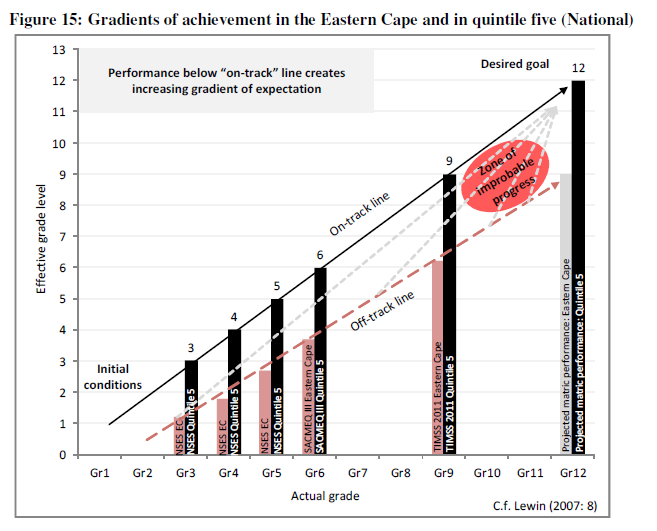
Yesterday the CDE released a 65-page report I wrote for them titled “South Africa’s Education Crisis: The Quality of Education in South Africa 1994-2011.” The graph above comes from the report and shows the large differences between the richest 20% of South Africa’s students and the average student in the Eastern Cape. Learning deficits grow as children move through the school system until they reach a zone of improbable progress where the possibility of passing matric is virtually non-existent. This is just one of about 10 topics that are covered in the report, some of the others are teacher content knowledge, inequality of educational opportunity, matric outcomes, youth unemployment, international rankings and policy suggestions. I include the first paragraph from the executive summary which provides an indication of the contents:

“The aim of this report is to provide an empirical overview of the quality of education in South Africa since the transition to democracy and, in doing so, comment on the state of the country’s education system. It will become increasingly clear that the weight of evidence supports the conclusion that there is an on-going crisis in South African education, and that the current system is failing the majority of South Africa’s youth. By using a variety of independently conducted assessments of pupil achievement the report shows that – with the exception of a wealthy minority – most South African pupils cannot read, write and compute at grade-appropriate levels, with large proportions being functionally illiterate and innumerate…While there have been some recent improvements in pupil outcomes, as well as some important policy innovations, the picture that emerges time and again is both dire and consistent: however one chooses to measure learner performance, and at whichever grade one chooses to test, the vast majority of South African pupils are significantly below where they should be in terms of the curriculum, and more generally, have not reached a host of normal numeracy and literacy milestones. As it stands, the South African education system is grossly inefficient, severely underperforming and egregiously unfair.”

 I wrote most of it last year, finished it up earlier this year and I’m very glad that it’s finally out. I think it’s a pretty good summary of our thinking on how the quality of education in South Africa has changed between 1994 and 2011 (at least as measured by assessments). I think the one thing I would add if I had to do it again is a more formalized discussion of accountability and capacity. I’ve subsequently written a paper for the IJR which should come out in 2014 where I flesh out the relationship between the two but it would’ve been nice to include it in this report as well. You can also look at this presentation for a brief snap-shot of that research.

If you know of anyone who may find the report interesting please do pass it along to them – the more the merrier! The first step to fixing a problem is admitting you have one, the second is correctly diagnosing its causes, and the last is correctly identifying the interventions necessary to deal with the causes and solve the problem. We’re currently at about stage 0.8.

Short interview…

unicorn

Recently I did a short interview on education in South Africa for the 2013 CSI Handbook (see here for the 2012 handbook). Although it may get edited, I suspect that it will be mostly what you see below. I’m interested to hear your answers to these questions – feel free to include them in the comments below…

  • What relationships have you discovered between access to education and quality of education in your research?
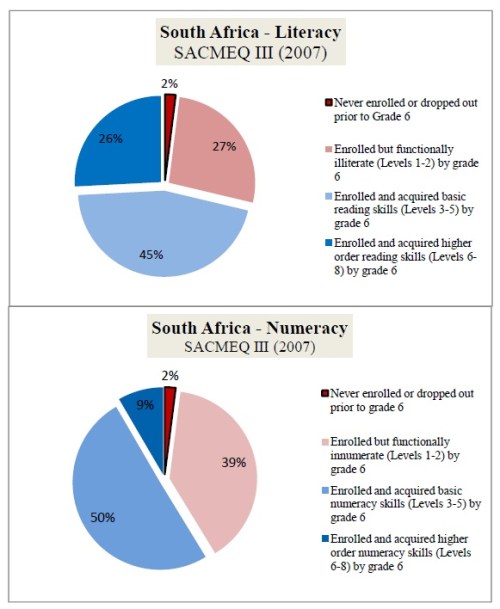
    • Access to education is a necessary but not sufficient condition for learning. Just because children are enrolled in school does not mean that they are learning, in fact, most of the evidence suggests that the majority of South African children are between one and two years behind the curriculum. So, although we have one of the highest rates of primary school enrolment in Sub-Saharan Africa (98%), hundreds of thousands of South African children are functionally illiterate. Rather than only looking at what proportion of grade 6 South African children are enrolled (98%), if we look at the proportion of South African 13 year olds that are literate, the figure is only 71% (in Tanzania it is 82% and in Kenya 87%).
  • You argue that there are two primary school education systems in South Africa and have pinpointed specific factors affecting wealthy and poor schools differently, based on analysis of SACMEQ data. What does this mean for how education interventions are implemented in different schools?
    • Almost all of the evidence we have suggests that we have two public schooling systems in South Africa, not one. The wealthiest 25% of schools are mostly functional and able to educate learners while the poorest 75% of schools are dysfunctional and unable to equip students with the numeracy and literacy skills they should be acquiring in primary school. Given that these two school systems are vastly different and that they face different problems, it’s only logical that interventions should be tailored to that particular school system. School interventions that work for poor schools that are atomized and badly run will, in all likelihood, be inappropriate and unnecessarily constraining for well-functioning schools.  
  • You’ve been vocal in asserting: “Teachers can’t teach what they don’t know”. How are teachers falling short, and why?
    • We know teacher content knowledge in South Africa is a major problem, particularly mathematics teacher content knowledge. Given that teacher content knowledge is central to teaching mathematics (and an integral part of the professional identity of the teacher), we really need to figure out how to improve both what teachers know, and how they teach. Simply getting the right answer isn’t the only concern: overly concrete mathematical methods may ‘work’ in grades one and two, but they prove problematic in higher grades.
  • Is there any empirical evidence to show that investing in teachers’ knowledge improves leaner outcomes? If not, what does improve learners’ results?
    • Internationally there is strong evidence that mathematical content knowledge for teaching does improve learner outcomes but locally there is less evidence. But that’s because very few South African studies of teacher content knowledge employ evaluation methods that are rigorous enough to draw causal conclusions, and most are very small localized studies which are not nationally representative. Perhaps the most convincing international research regarding improving learner outcomes is the importance of quality early childhood development – I think that is really where we need additional emphasis in South Africa. Assessing and raising the quality of Grade R (and pre-Grade-R) in South Africa.
  • Where are the gaps in education research in South Africa?
    • Three things we don’t really understand are 1) The impact of language switching between Grades three and four, 2) how to do in-service teacher training (almost all the existing programs don’t work), 3) what proportions of the low and unequal learning outcomes that we see at the end of Grade 3 are attributable to low quality preschool, home background and low quality Foundation Phase teaching.  

*Thanks @MarinaPape for the cool pic 🙂

Meaning, inequality, sociology and English majors…

happen

  • Such a sweet cartoon about the meaning of questions and questioning meaning 
  • Really useful World Bank tool developed by Deon Filmer. It allows you to easily get graphs and tables on educational attainment and completion for a variety of countries.
  • SACMEQ III (2007) country reports have finally been finalized and are now available for download on the SACMEQ website
  • Angus Deaton writing in the Lancet weighs in on the fight between Sen and Bhagwati by comparing their two new books. Short article and worth the read.
  • The Rise and Consequences of Inequality in the US” – Krueger’s 2012 address to the Council of Economic Advisers. Worth a read. In case you were wondering how unequal South Africa’s income is distributed, the richest 10% of South Africans earn 58% of total income, the poorest 50% earn 8% of total income, and the poorest 10% earn 0.5% of total income (from this 2012 World Bank report on inequality of opportunity in SA).
  • The latest edition of the British Journal of the Sociology of Education is on “Education and Social Mobility” – some interesting stuff in there. I’m glad the sociologists are seeing the light as far as empirical research is concerned. One quote from the intro by Brown, Reay & Vincent: “The mass of research on student identities, aspirations and experiences of school, college and university has been overlooked, partly because it is primarily based on qualitative rather than quantitative methods of data collection. While this points to a weakness in mainstream mobility studies it also points to a failure of the sociology of education to engage in broader debates around intergenerational mobility, notwithstanding its engagement with wider debates on social inequalities and social justice. It also raises questions as to whether the next generation of education researchers will have the training in quantitative methods and techniques to engage in future mobility studies” (p.638).
  • A. H. Halsey has similar sentiments when he says that “Conflicts between advocates of quantitative and qualitative methods still rage in sociology. I can claim to be among the pioneer supporters of quantitative methods but also to have been friendly towards qualitative work. Nevertheless, the neglect of statistical training still seems to me to be a barrier, not only to sociological understanding but also to the supply of competent teachers of the subject
  • Quote of the week by Adam Gopnik “So: Why should English majors exist? Well, there really are no whys to such things, anymore than there are to why we wear clothes or paint good pictures or live in more than hovels and huts or send flowers to our beloved on their birthday. No sane person proposes or has ever proposed an entirely utilitarian, production-oriented view of human purpose. We cannot merely produce goods and services as efficiently as we can, sell them to each other as cheaply as possible, and die. Some idea of symbolic purpose, of pleasure-seeking rather than rent seeking, of Doing Something Else, is essential to human existence. That’s why we pass out tax breaks to churches, zoning remissions to parks, subsidize new ballparks and point to the density of theatres and galleries as signs of urban life, to be encouraged if at all possible. When a man makes a few billion dollars, he still starts looking around for a museum to build a gallery for or a newspaper to buy. No civilization we think worth studying, or whose relics we think worth visiting, existed without what amounts to an English department—texts that mattered, people who argued about them as if they mattered, and a sense of shame among the wealthy if they couldn’t talk about them, at least a little, too. It’s what we call civilization.” From the New Yorker article “Why teach English?


Links I liked…

racial stereotypes


I’m currently in Helsinki at the UNU WIDER conference on “Inclusive Growth in Africa” – I presented my paper which combines access to education and the quality of education. Helsinki is a pretty cool city although not particularly exciting or historically important. Tallinn, which is just a 2.5 hour ferry-ride away, is much more interesting and quaint.

  • Conceptual map of learning theories in education – helpful mind-map of all the different learning theories with links to their Wikipedia pages.
  • Also using CMAP technology, check out the Grade 4 – 6 Life Sciences and Natural Sciences concept maps developed by Megan Beckett at Siyavula. On the Thunderbolt Kids website you can also download posters and textbooks for Grades 4-6.
  • The 1861 infographic that Abraham Lincoln used to see the reach of slavery in the US – here. (via FarnamStreetBlog).
  • Wonderful lecture by Eugene Peterson titled “Teach us to Care and Teach us Not to Care” (PDF)
  • The Institute of Education Sciences’ “What Works Clearinghouse” is a really interesting concept. Essentially like a meta-analysis tool to give end-users (like teachers) an overview of what the research says on a particular topic. Very interesting. I want one!
  • Great repository of CS Lewis articles – here
  • ChronoZoom – looks pretty cool 🙂

SACMEQ at a glance for 10 African countries…

SACMEQ at a glance


Towards the end of last year I got really frustrated that no one had used the SACMEQ data to create an “Education at a Glance” type of document which contained the essential statistics we can get from SACMEQ. (For those of you who don’t know, SACMEQ is a survey that is conducted in 14 African countries and tests Grade 6 students in mathematics and language and also has a bunch of other information on things like teacher content knowledge, student background, school facilities etc.) So I holed myself up in my office for a few days and did the number crunching and created “SACMEQ at a Glance (10 countries combined PDF)” for ten of the SACMEQ countries. For some reason I didn’t blog about it when I did it, so here it is 🙂

It’s been available on the RESEP website for some time now and I’ll include the decriptive blurb from there below:

“The SACMEQ at a glance series is part of an ongoing research project on data from the Southern and Eastern African Consortium for Monitoring Educational Quality (SACMEQ). The aim of these documents is to provide a two page snapshot of some important elements of the primary school system in each of the participating countries, allowing for comparisons both within and between countries. Statistics are reported for ten African countries for SACMEQ II (2000) and SACMEQ III (2007). The ten countries are: Kenya, Lesotho, Malawi, Namibia, South Africa, Swaziland, Tanzania, Uganda, Zambia and Zimbabwe. The results are also presented for three sub-groups: school location (urban and rural), gender (boys and girls), and student wealth (poorest 25% of students and wealthiest 25% of students) for each country. Some of the reported statistics include the prevalence of functional illiteracy and innumeracy, textbook access (reading and mathematics), pupil-teacher ratio, teacher content knowledge, proportion of students receiving a free school meal, as well as the proportion of schools with electricity and water, among many other statistics. These documents should be a helpful resource to researchers and policy-makers alike, providing accessible information in a comparable format.”

Choice, data, assessments and success…

yellow x

  • A wonderfully-witty article on liberty, choice and ranting manifestos about public versus private education. This is no surprise to you but it turns out I’m a bad person. (Thanks @HendrikvanB)
  • Wentworth Miller declines an invitation to be guest of honor at the St Petersberg Film Festival in Russia because he is gay. That’s certainly one way to come out 🙂
  • A NYT article that every academic in an education faculty should read (and every politician for that matter) titled “Guesses and hype give way to data in study of education” [as an aside – this is pretty funny 🙂 )
  • Motshekga announced this week that teacher assessments will go ahead, not that I think my article had anything to do with this, but I did publish an article only one week ago on this exact topic – “Teacher’s can’t teach what they don’t know
  • Quote of the week is by Victor Frankl via BrainPickings: “Don’t aim at success — the more you aim at it and make it a target, the more you are going to miss it. For success, like happiness, cannot be pursued; it must ensue, and it only does so as the unintended side-effect of one’s dedication to a cause greater than oneself or as the by-product of one’s surrender to a person other than oneself. Happiness must happen, and the same holds for success: you have to let it happen by not caring about it. I want you to listen to what your conscience commands you to do and go on to carry it out to the best of your knowledge. Then you will live to see that in the long run—in the long run, I say!—success will follow you precisely because you had forgotten to think of it.

Welcome to the future…

big history project

  • 21st century education has arrived. The Big History Project (above). Bill Gates throws his weight behind a brilliant history professor and creates an interactive website which has lesson plans, assessments, videos, links, worksheets, and everything you might want when teaching high school history about the big questions in life. So very happy to see this!! Now we just need this for 25 other topics/subjects and we will have a world-class education available to anyone with an internet connection! How exciting.
  • Two photos of the Shanghai skyline taken 26 years apart. Definitely the most incredible image I’ve seen this year. Pictures speak a thousand words.
  • The history of the world since 2000 BC distilled into a single graph – wow. WOW!
  • 40 maps that will help you make sense of the world – incredible!
  • Great 2 minute video animation about the Pale Blue Dot 
  • Great OECD case study on the success of education reform in Brazil: “Brazil: Encouraging lessons from a large federal system
  • Teaching teachers technology – M&G article summarizing the recent EdTech conference in SA.
  • “You become like the 5 people you spend the most time with” This awesome group photo from the Solvay International Conference on Electrons and Protons has 29 people in it, 17 had already won or would go on to win the Nobel Prize. Go Marie Curie!

We read, we lead…

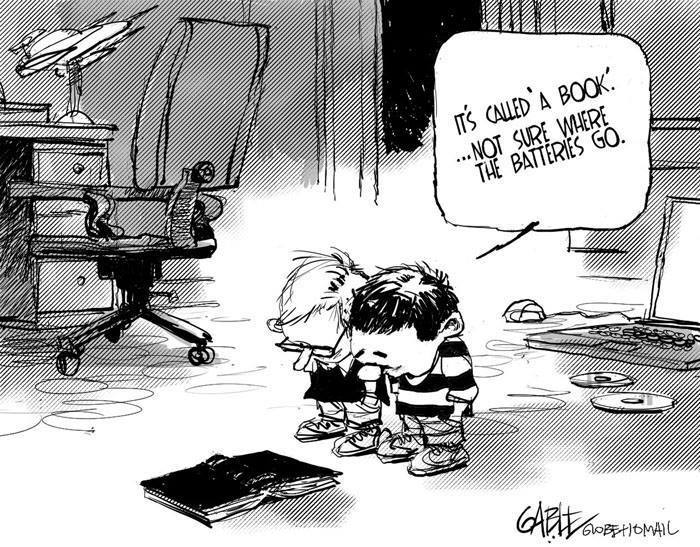
batteries

Some great course outlines for those of you eager to find comprehensive reading lists on curriculum, education in developing countries and the economics of education:


Sunday reading…

the-people-dont-know-their-true-power-tc-cartoon-sad-hill-news


The arc of history is bent towards justice…

133776_600

  • A usually conservative US Supreme Court recently ruled that the Defense of Marriage Act (DOMA) is unconstitutional. Their rulings on Prop 8 also clears the way for gay marriage in California. On this note, it’s always nice to remember that while the arc of history is long, it is bent towards justice (MLKJ). What yesterday seemed ridiculous (women voting? Interracial marriage? Equal rights for black Africans) is today commonplace. The legalization of gay marriage across the States and across the world is now just a matter of when, not if. Wonderful to think that gay marriage has been legal in South Africa for almost 8 years – in 2006 the National Assembly passed the motion by a vote of 230 to 41.
  • For those of us ascribing to the Christian faith, I highly recommend this article by Prof Smedes titled: “Homosexuality and divorce, why not treat them the same?” and this letter from the Bishop of Salisbury. For those concerned with secular ethics see “Homosexuality is not immoral” by Peter Singer. I obviously have more to say on this issue so there will definitely be a post or two on this in the future…
  • On a related note, Exodus International – the largest ex-gay / pray away the gay – ministry issued an apology and shut down. Also see this The Beast article on this – I loved the quote “Mercifully, there comes a point when even the most committed of ideologues admit defeat.”
  • Really useful website “World Data on Education Seventh Edition 2010/11” – helpful country summaries for LOADS of countries…
  • Awesome website showcasing the interiors of wonderfully creative people: http://theselby.com/ – thanks Laura Rossouw
  • The wonderful Stephen Fry on loneliness and his attempted suicide.
  • Quote of the week comes from An interview with Milton Friedman:
    • “I think the major issue is how broad the evidence is on which you rest your case. Some of the modern approaches involve mining and exploring a single body of evidence within itself. When you try to apply statistical tests of significance, you never know how many degrees of freedom you have because you’re taking the best out of many tries. I believe that you have a more secure basis if, instead of relying on extremely sophisticated analysis of a small fixed body of data, you rely on cruder analysis of a much broader and wider body of data, which will include widely different circumstances. The natural experiments that come up over a wide range provide a source of evidence that is stronger and more reliable than any single very limited body of data.”